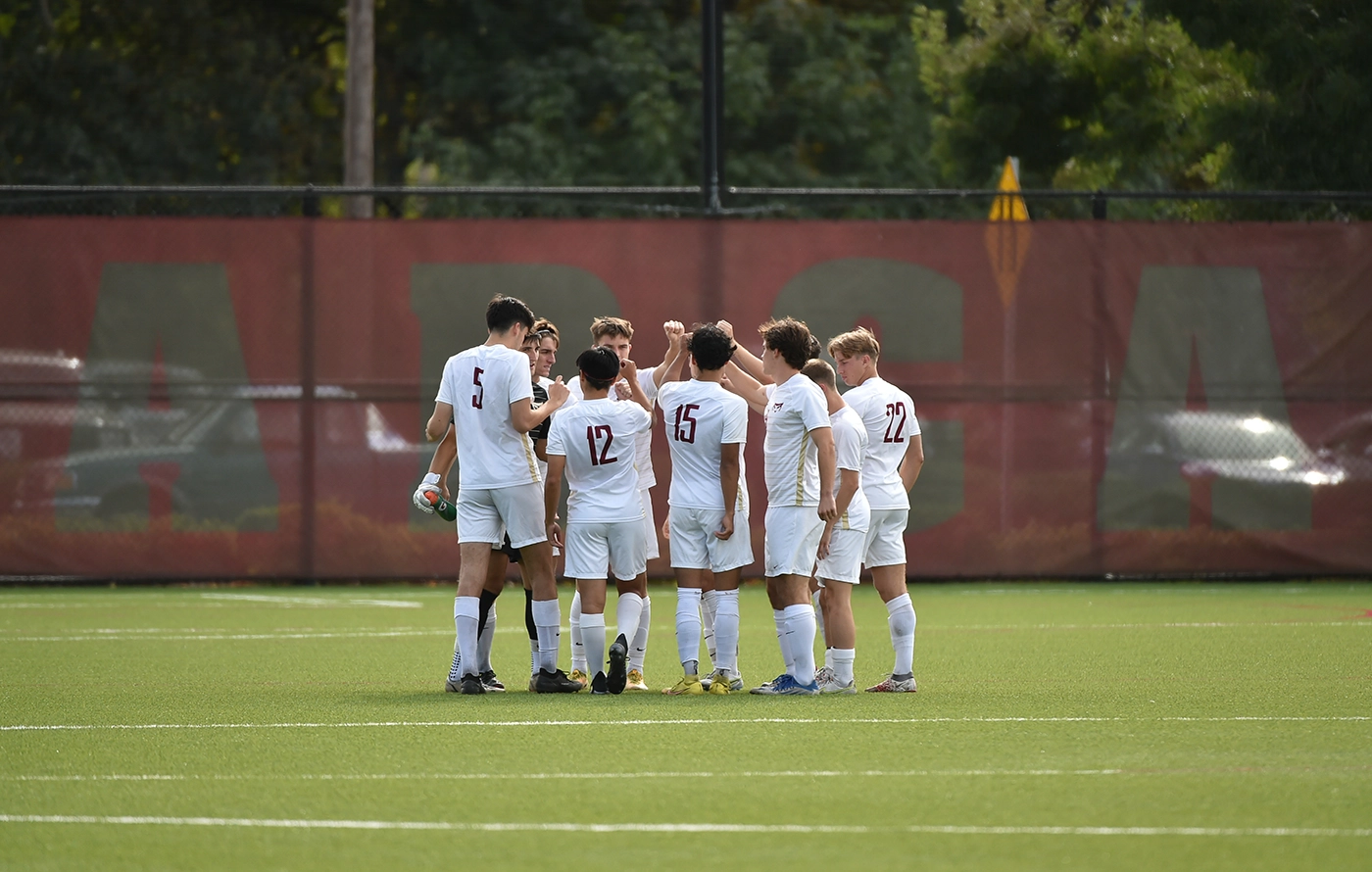
The men’s Bearcat soccer team had a secret weapon this season, and it wasn’t on the roster. It was a custom-built analytics dashboard that turned every match into actionable data.
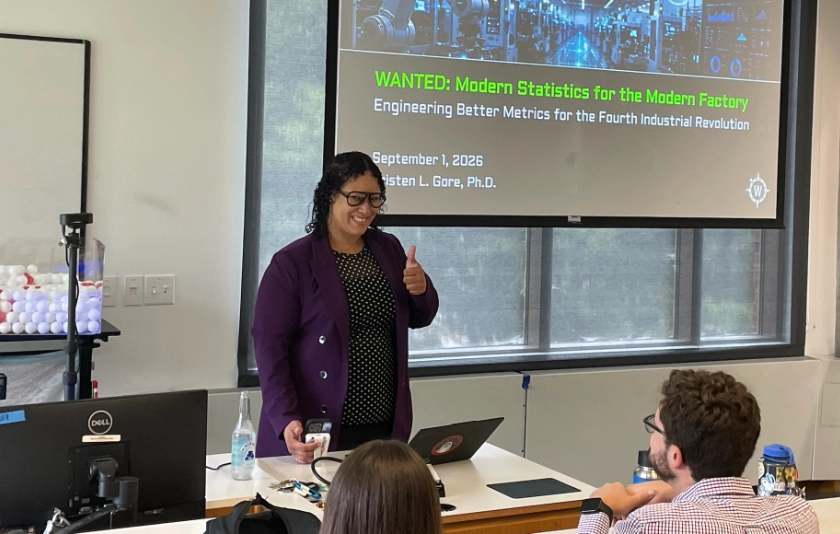
Supported by Assistant Professor of Data Science Kristen Gore, the Willamette University Soccer Analytics (WUSA) team created an interactive dashboard that visualizes data from the men’s soccer team’s games to help coaches analyze the team’s performance, reveal patterns, and ultimately transform their strategy on the field.
“It changed the way we played,” shares Haydn Duncan BS/MS’26, a center back defender on the men’s soccer team who worked on the project. “After showing my coach the analytics and outcomes, he decided to make some changes and we had a standings improvement as a result.”
“This real world application made me confident in my decision to major in Data Science,” Duncan says.
The project builds on a similar initiative Gore facilitated for the Bearcats football team, allowing the WUSA to build on their discoveries. The technical challenge for this project was significant: collecting high quality data from game videos then coding an interface using R and the R Shiny package. Duncan worked alongside fellow soccer players and Data Science Dual Degree students Dylan Ray BS/MS’26, Ryan Doyle BS/MS’27 to ensure the data captured was what coaches needed to see.
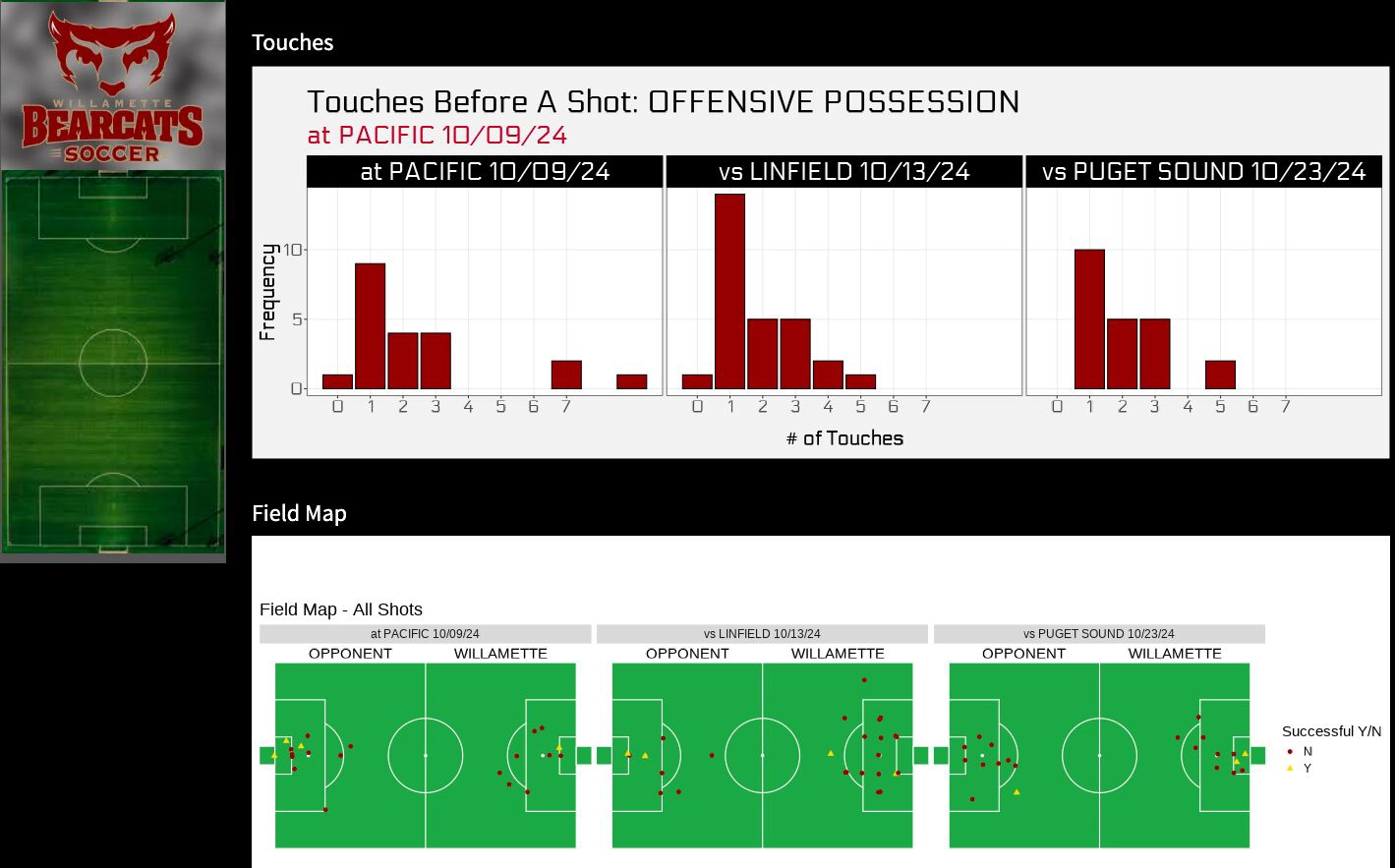
“We created a website format, with clean graphs and buttons that users can interact with, and used a theme that matched the Willamette colors,” said Seira Ramchandani BS/MS’26. “We wanted to make it useful and visually appealing.”
Gore organized the group’s efforts using the Six Sigma methodology – a data-driven framework for process improvement used across industries. Students defined the project, met with coaches as clients, measured and analyzed data, tested solutions, and found a way to maintain improvements over time.
Involving students in work not only with real world applications but direct connections to their lives is part of Gore’s initiative when organizing student projects. “Seeing something tangible is motivating,” says Gore. “I had so many soccer players as students, and I wanted them to see how coding and data science skills applied to their lives and interests.”
For Jackson Garro BS/MS’26 who made significant contributions to the development of the interface, the project opened career pathways.
“I had so many soccer players as students, and I wanted them to see how coding and data science skills applied to their lives and interests.” – Professor Kristen Gore
“Knowing that this dashboard could be used in the future and create real value made the work especially meaningful, especially in seeing a project develop from an initial concept into a finished product that can be actively used,” says Garro. “I’m very interested in pursuing a career in the sports industry focused on data analytics and performance analysis, and this project helped me strengthen my ability to translate technical analysis into insights while having to account for the real-world context of the sport.”
This project is an example of what applied learning looks like at Willamette. “Coach Matt Corti-Young and I wanted to use the project to show students what sorts of careers they can prepare for,” adds Gore.