At Willamette University, faculty and students are bridging divides between ancient sites and modern technology. The result: exciting discoveries that help uncover the secrets of the past from over 5,000 years ago using data collected from Scotland’s neolithic Ness of Brodgar site.
Environmental Science and Data Science student Dorsey Pearson BS’26 is the most recent of the many students to contribute to Professor of Environmental Science and Archaeology Scott Pike’s research at Willamette’s Archaeology Field School, which has studied the site at Scotland’s Ness of Brodgar. Under the guidance of Albaugh Associate Professor of Statistics and Data Science Heather Kitada Smalley, data science students have developed first-of-its-kind software to analyze and visualize data from the site’s floor chemistry.
“Through our collaboration, we have been able to integrate data science learning goals with my large and complex geochemical data set,” Pike shares. “The collaboration has been a tremendous asset to my archaeogeochemical research on the clay floors from various structures at the Ness of Brodgar.”
Pearson focused on geochemical spatial and temporal heatmaps and presented his findings at the Geological Society of America’s annual Connects Conference in San Antonio, Texas.
“Before this I had little experience with research at all, let alone with archeology,” Pearson says. “This research not only gave me the incredible opportunity to conduct work in the field, but also to travel abroad for the first time.”
Also part of the innovative research was Avery Pike BA’21, MS’24, who spent several seasons collecting data before completing his master’s capstone analyzing geochemical data from the site and eventually mentoring Pearson as he began his research.
Interdisciplinary collaboration in action
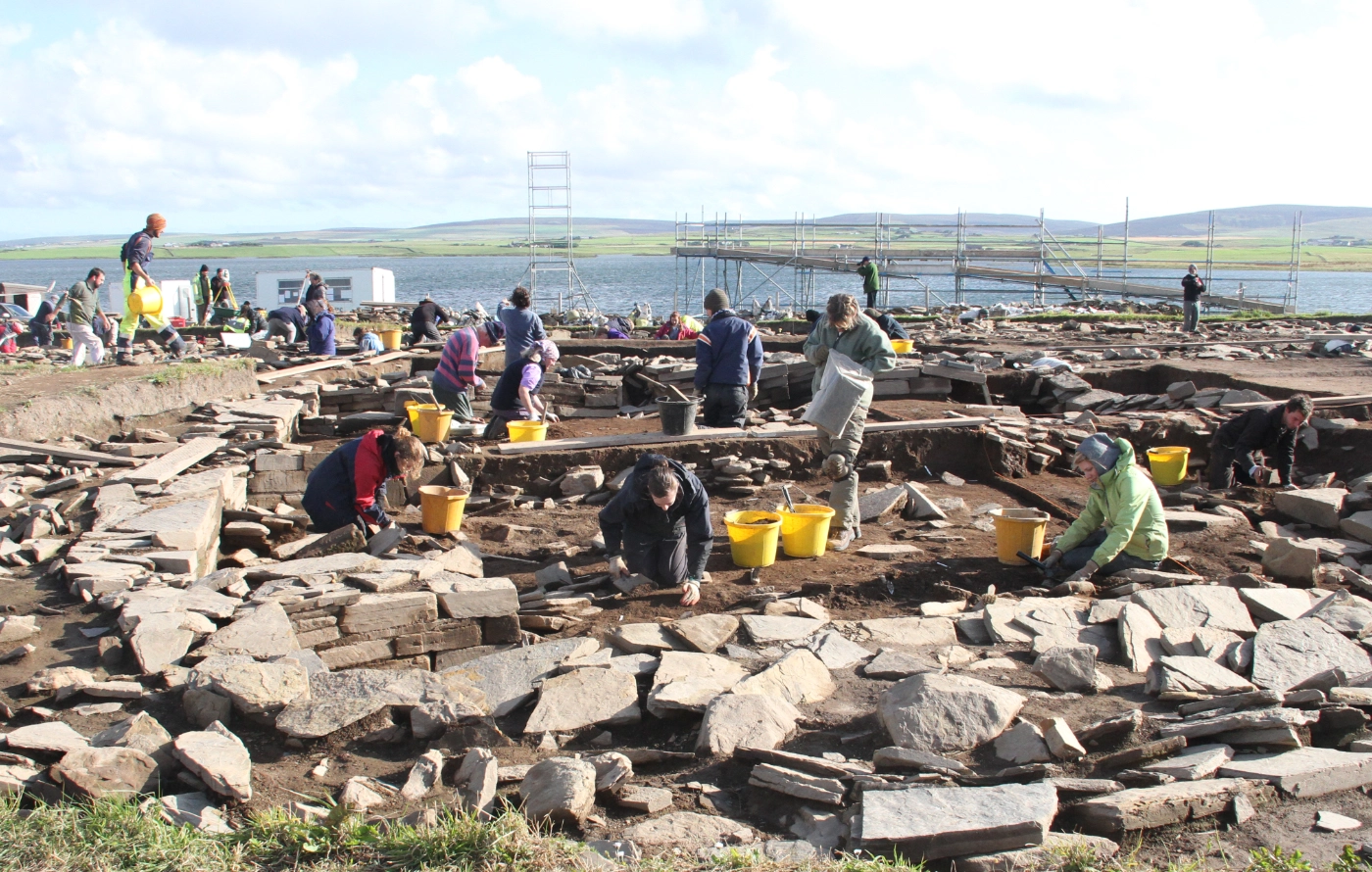
The Ness of Brodgar, located on the Orkney Archipelago in Scotland, is an archaeological site dating back to the Neolithic period. Though excavations have taken place for two decades, researchers are still making interpretations of what exactly the ancient Orcadians did there.
Willamette is the only American university to partner with the Orkney Research Center for Archaeology and the University of the Highlands and Islands on this award winning and internationally recognized project. Many Willamette Archeology students have had the opportunity to develop their research skills and gain valuable field experience at the site, but this new collaboration marks an opportunity to involve students from other programs.
Since active excavation of the site ended in 2024, interdisciplinary research teams at Willamette have continued to work with recovered archaeological materials and geochemical data with the potential for additional collaborations in the future.
“Thousands of samples were collected over the years from the site, and our mission was to make it tangible and accessible to other researchers,” Kitada Smalley says. “We're excited because our work gives power to the researchers to investigate the data.”
The researchers created an application within the statistical program RStudio which looked at trends over time to explore the changing uses of the archaeological site — providing valuable insights to other researchers who are studying the area.
“It makes students better data science students to be passionate about a particular application,” Kitada Smalley continues. “Data science students work on a continuum from applied to theoretical, and this project gives students a chance to gain deeper insights from applied work in other fields.”
“Opportunities most undergraduates don’t have access to”
The opportunity to contribute to innovative interdisciplinary research isn’t lost on Pearson.
“I picked Willamette for opportunity and funding. I wanted to have opportunities that most undergraduates don’t have access to, like conducting research abroad. I also knew that Willamette’s environment of close student-faulty relationships would provide me with support,” he says.
“Coming from a working class background, I’m ever grateful for Willamette’s financial assistance, as it allowed me to truly develop as a young academic and professional,” Pearson adds.
As the project continues to advance, students and faculty are excited to co-author an academic paper on their findings and continue uncovering insights about the ancient site.