In elementary school, Izzy Robbins BS’28 had a life-changing experience playing with LEGO robotics sets. Transforming the colorful toy blocks into machines piqued her imagination and inspired her to pursue a career in STEM (science, technology, engineering, and math).
“That was the first time I got to do STEM outside of class,” she says. “I feel like that exposure was a key part in giving me the confidence to go into a STEM field.”
Now a Computer Science and Data Science double-major at Willamette University, Robbins has come full circle. Along with the other students in Assistant Professor of Data Science Kristen Gore’s LEGO Robotics course, she’s helping teach students at Salem’s Bush Elementary School about the wonders of STEM — one brick at a time.
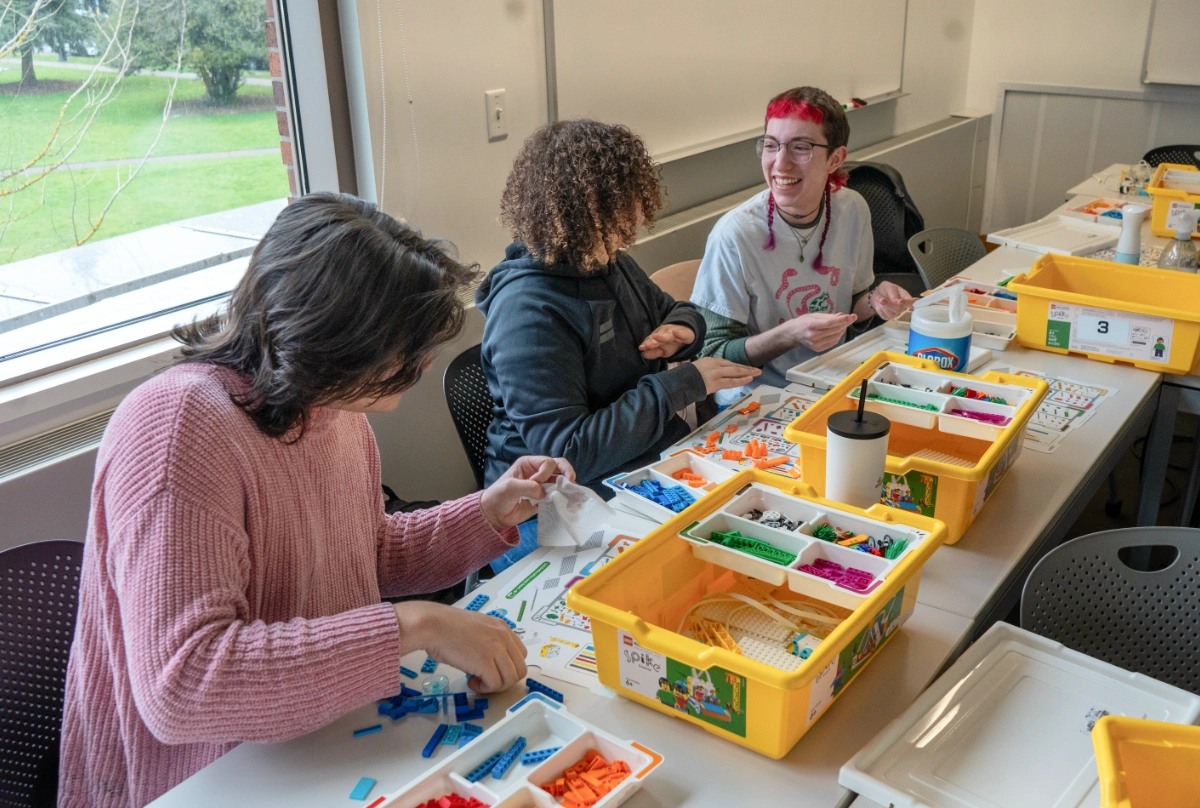 Studies have shown that positive early learning experiences are key to inspiring children to pursue careers in critical STEM fields. That exposure is especially important for communities who are underrepresented in STEM professions. That’s where Gore’s two-credit semester-long data science course comes in: to help give kids the confidence to thrive in STEM.
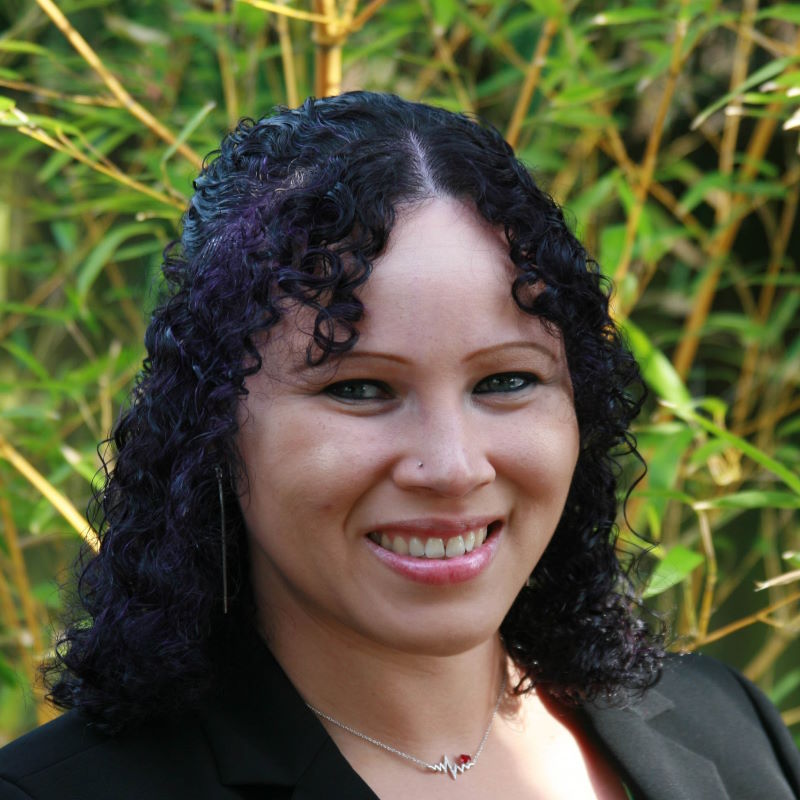
“Our goal is not just to give our elementary school students a positive STEM experience, but also to make them feel like they belong,” says Gore. “We want them to think ‘I am an engineer. I am a scientist.’ Even in a few days, it's really fun to see that progression in them.”
A passionate advocate for STEM outreach, Gore hopes that her course can help address these disparities in the Salem community. After securing funding from the student-led Community Action Fund for Equity and Sustainability (CAFES) and a partnership with the Office of Civic Engagement, she knew that the time was right to bring the program to Willamette.
Once she put out the call to join the LEGO class, Willamette students from across majors jumped at the opportunity to use their skills to make a real community impact and live out Willamette’s motto: Not unto ourselves are we born.
Derec Gregory BS’27, a Computer Science and Data Science double-major, was inspired to join the class by their father, an elementary school teacher.
“It's really cool to give back and follow in his footsteps,” Gregory says. “I love getting to work with the community.”
Building Bridges
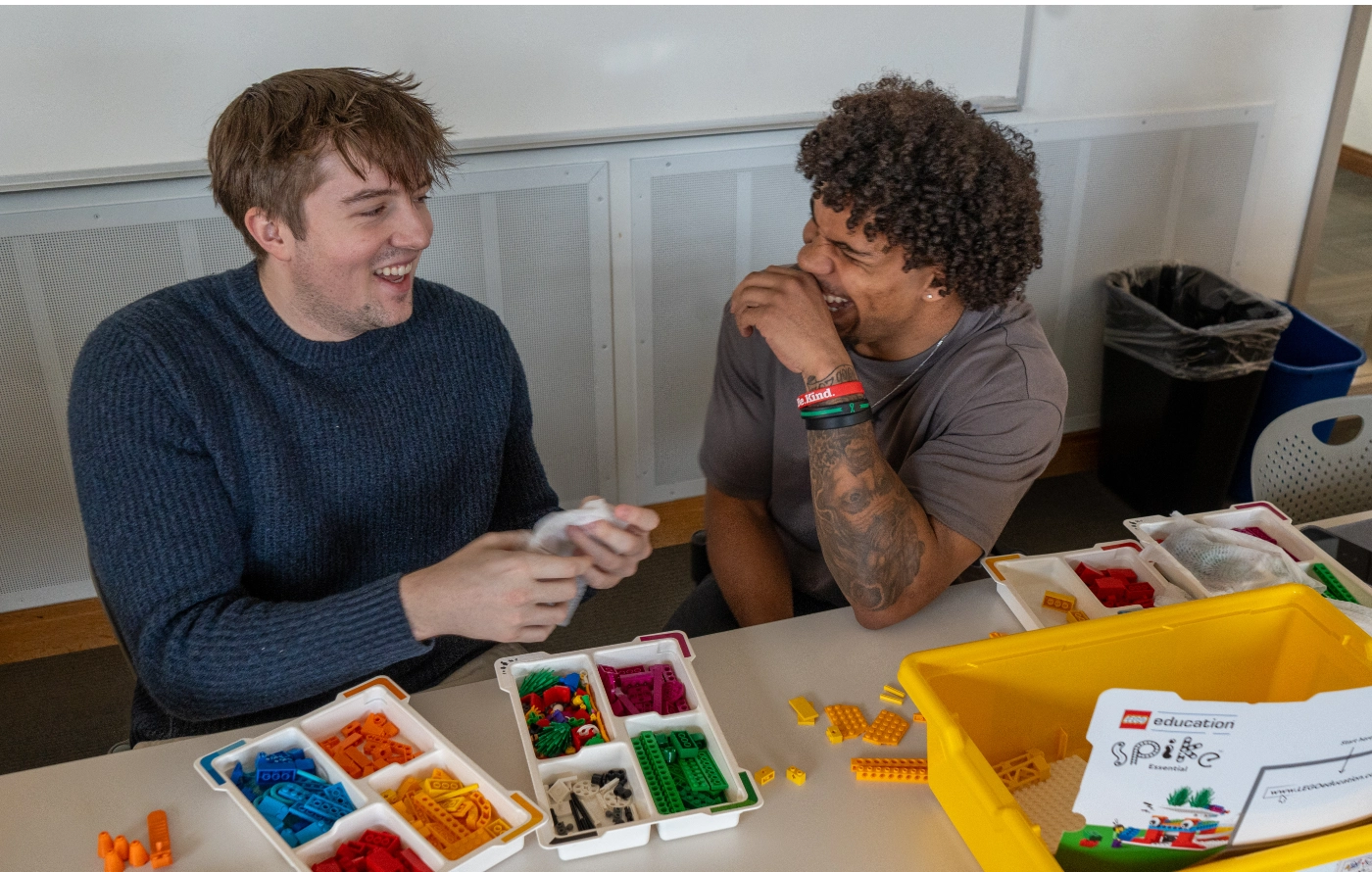
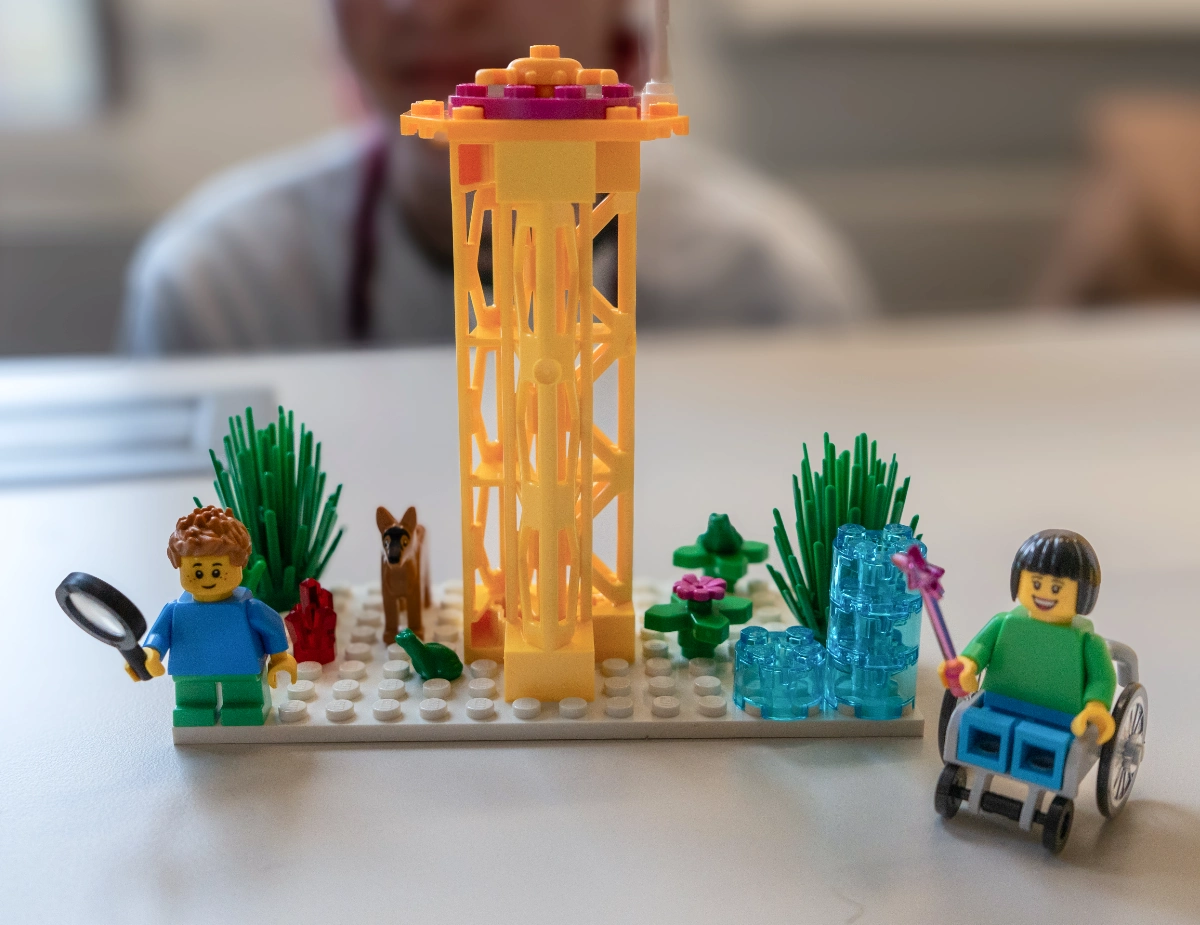
Each LEGO lesson begins with a short story that transitions into a problem for the students to solve. One activity for first grade students introduces a character named Maria, a girl who is afraid of roller coasters. Students are challenged to build Maria the perfect motorized swing. The students then have to iterate their design to make it fit Maria’s needs, experimenting with the rotation speed and other programmed variables.
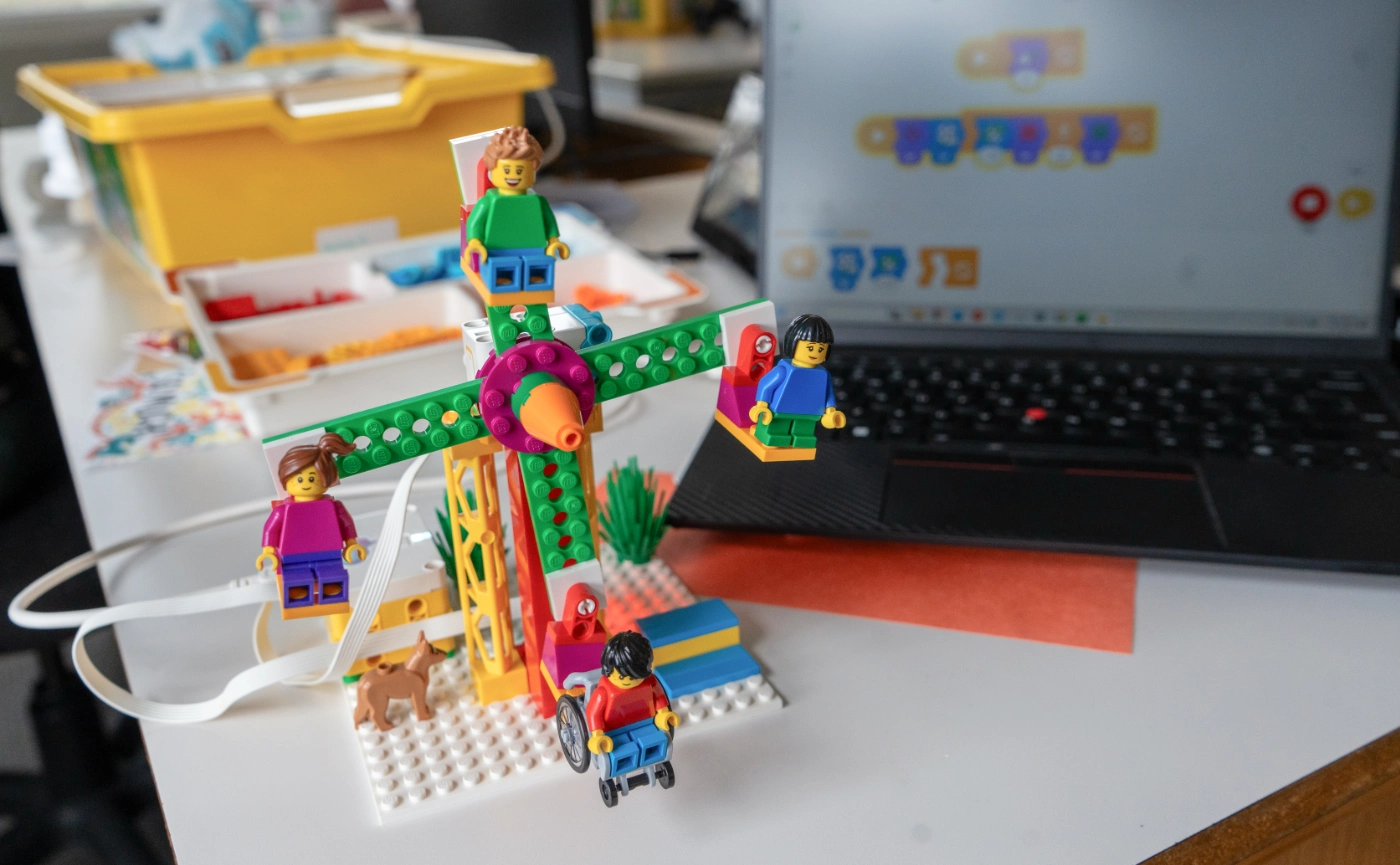
During the lessons, the classroom is buzzing with activity. A child laughs as they try putting a LEGO dog figure on the swing to see what will happen. The plastic clatter of blocks rings out as a student rebuilds their machine for the second time, this time just a bit better than the last. Throughout the room, sounds of support and encouragement from the Willamette students can be heard as the kids figure out a new solution to a problem.
“We want them to think ‘I am an engineer. I am a scientist,’” Gore says.
While they’re having fun building their LEGO creations, the students are also practicing problem solving, collaboration, and the step-by-step thought processes that are essential for tasks like coding. Data Science and Sociology double-major Talia Goldenberg BS’27 brings their unique academic background in both data and human behavior to the classroom — giving students individualized attention that engages with different learning styles.
“I really love watching how each kid takes on tasks differently,” says Goldenberg. “Some kids are more enthusiastic about the coding, some kids are more enthusiastic about the building, others like building a story and weaving it into the code. Watching their thought process is really rewarding and satisfying.”
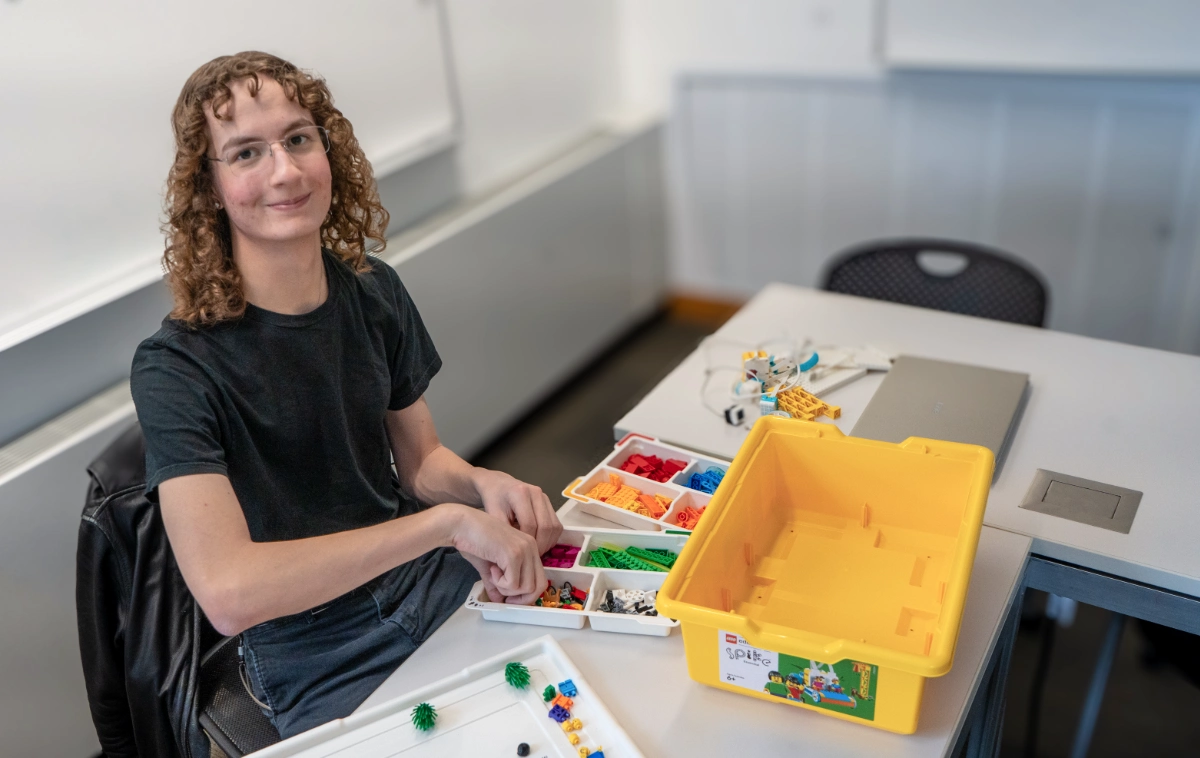 The class doesn’t just benefit the elementary school students; it’s also a chance for Willamette students to learn more about the community in which they live and study — building a bridge across 12th Street between backgrounds and communities. Before they go into the elementary school classroom, Gore’s students learn about the history of public education, early-childhood learning development, and teaching skills, ensuring they are prepared to engage with the kids. Gore even brought her own mother, a retired middle school science teacher, to give students a real-life look at what it means to teach young people.
 So far, Gore’s class has built a partnership with Salem’s Bush Elementary School, located right across the street from Willamette’s Salem campus. A Title I school with a high proportion of students from low-income families, Bush Elementary is an important place to bring these lessons in STEM confidence.
Gore hopes to expand the program to additional grades and schools in the Salem-Keizer School District and beyond — using the power of community-based learning and the joy of building with LEGO to inspire the next generation of STEM professionals in Willamette’s backyard.
“It’s very important that we keep sending students into STEM,” Gregory says. “The earlier we can build their computational thinking skills, the more prepared they will be to become STEM majors, and eventually, scientists.”