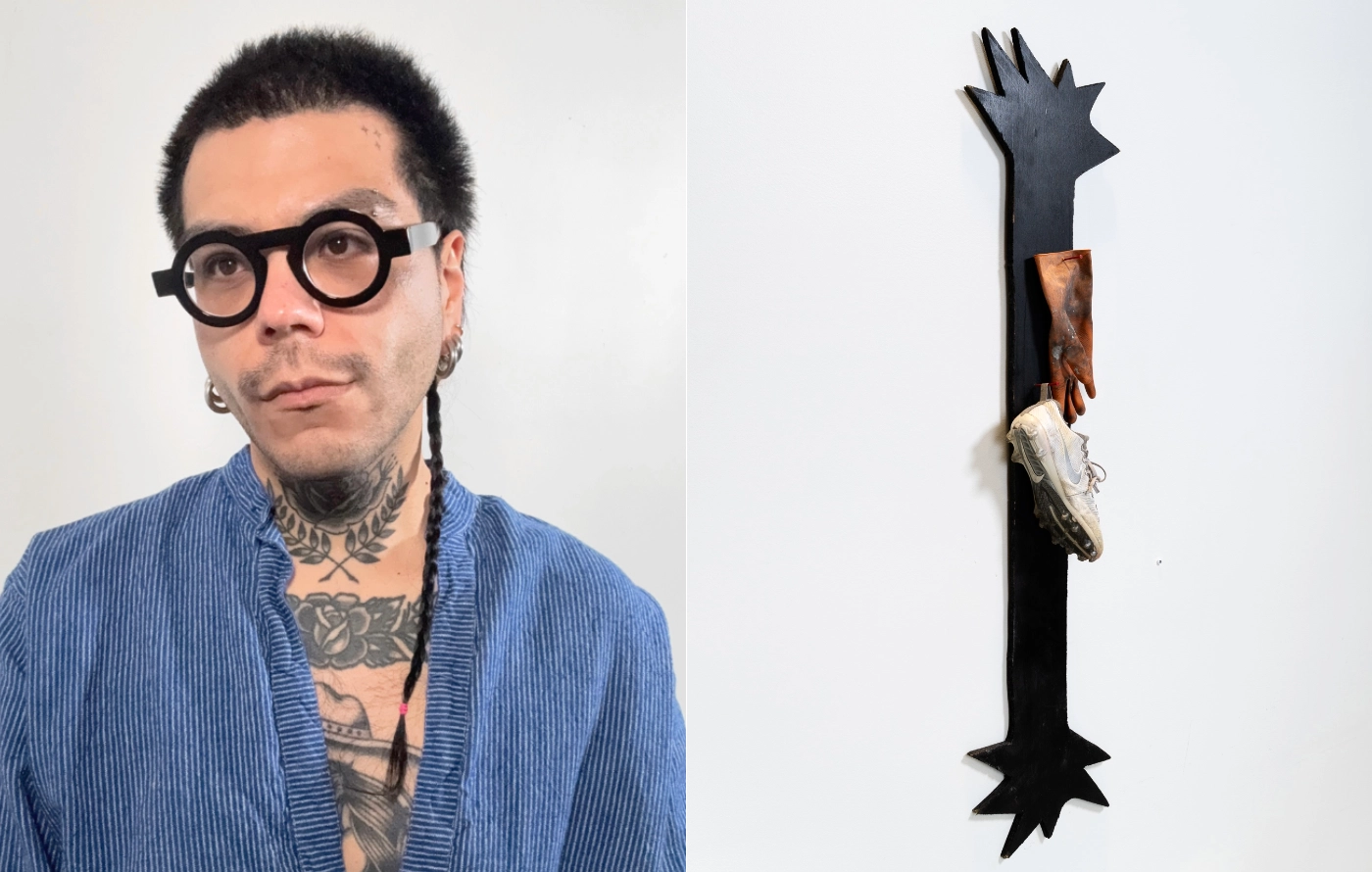
When Lalo Perez BFA’29 was selected to serve as a GLEAN artist, they had just begun their studies in PNCA’s Intermedia Arts program. Over 5 months, Perez created eight distinct pieces with one important parameter: materials had to be sourced from Portland’s Metro Central Transfer Station, perhaps better known as the city’s “dump.” Drawing on resources, mentorship, and community from PNCA, Perez created a new collection of work that developed themes in materiality and identity.
“It was the first time where I was very intentional about only using materials that had been used before,” Perez shares. “We toured the dump and had access to things like the hazardous waste. I started grabbing metals, woods, paint, glues — even couch cushions. It helped having a studio in the Glass Building for the term to have space to then create with these materials.”
GLEAN is a juried art program that uses art to make people think about what they consume and what they throw away. Each year, a panel of arts and environmental professionals select artists from the Portland area to create new work from salvaged materials with the intention to raise awareness and reduce waste. Notably, Perez was the only BFA student chosen as part of the 2025-26 residency class. PNCA’s mai ide MFA’25 and Adia Gibbs MFA’24 previously served as artists in the program. After safety training and visits to the transfer station, artists create work to be exhibited and sold in a month-long show.
The experience challenged Perez’s artistic perspective while providing valuable communication and professional development skills.
“We also spoke on panels,” Perez adds. “And I realized I had developed my skills in being able to talk about my work from being in school.”
Finding guidance in PNCA coursework and community
To prepare for the residency, Perez strategically chose PNCA classes that were in conversation with the work they were creating for GLEAN, having found out about their selection before they enrolled in spring courses.
“Erin Doughton’s Performance class helped me feel more free in the way I create and see material as gestures in the way things flow,” Perez shares. “Liza Rietz also helped me feel confident in what I was doing in our Construction and Sewing class. It helped me build a lot of courage in working with new materials.”
“I also took Sara Huston’s Object and Design class,” Perez adds. “I could nerd out about material with her all day. But everyone in the class was really generous. I could go up to Huston or other students and ask, can you talk me through welding? Everyone was so patient and understanding of how people learn. That went a long way.”
Perez was supported by faculty who understood the needs of working artists, but support from PNCA went far beyond getting more time to work on assignments.
“It was my first time building a body of work, and I was a little overwhelmed confronting things like imposter syndrome,” Perez says. “But what really grounded me in that time were the conversations I was having with other students and instructors.”
With the GLEAN experience behind them, Perez continues to earn arts residencies that help them strengthen their thematic language and develop as a professional artist. “I’m in Mexico City for the Lab Program, studying queer theory around Latino América in my work with abandoned construction sites. I’m thinking a lot about the way we deconstruct and reconstruct identity in different environments.”
With the support of the PNCA network, community, and curriculum, Perez’s work continues to push boundaries, transforming everyday discarded objects into brilliant works of art.