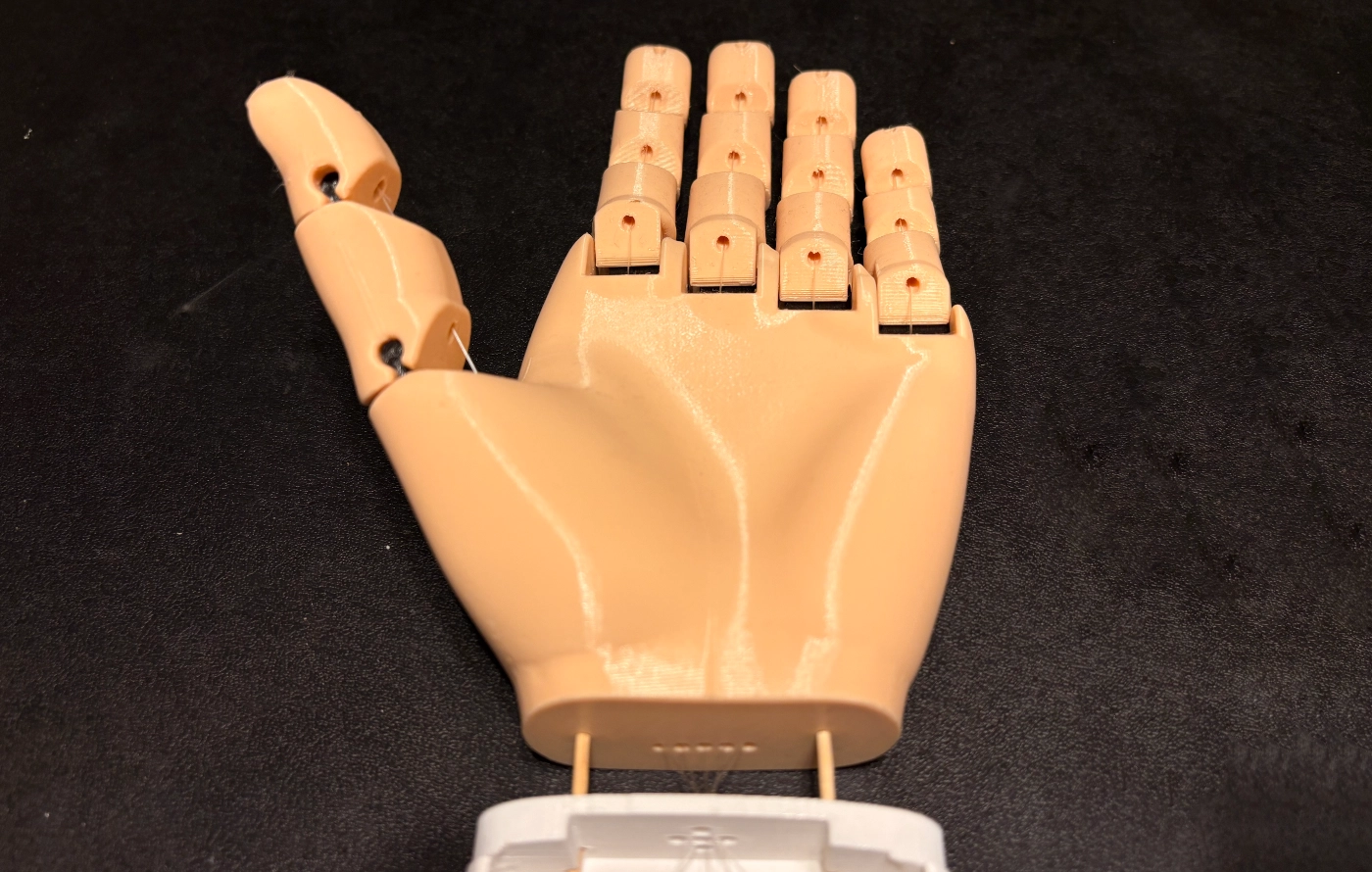
From delicate surgeries and prosthetics to theme park attractions, the mind-bending applications for robotics technology can sometimes feel like science fiction. But for recent Willamette University graduate Jordan Fasolt-Holmes BS’26, creating a real-life robotic hand meant bringing the right set of computer science tools together.
Even though he was already working with Assistant Professor of Computer Science Fred Agbo on research into developing an ethics-infused AI curriculum for underrepresented high school students, Fasolt-Holmes decided to take on the extra challenge of an independent capstone project to build a robotic hand that moves in real time.
“Willamette puts an emphasis on multidisciplinary studies, so I had such a broad range of skills to pull together for a new kind of project,” he says. “I combined what I learned as a Computer Science major to use machine learning, coding, and motorized hardware.”
Fasolt-Holmes started the project while studying abroad in Rome during his senior year. While Ancient Roman innovation served as a backdrop at the project’s inception, the technologies powering his idea were at the forefront of modern AI and computer vision design.
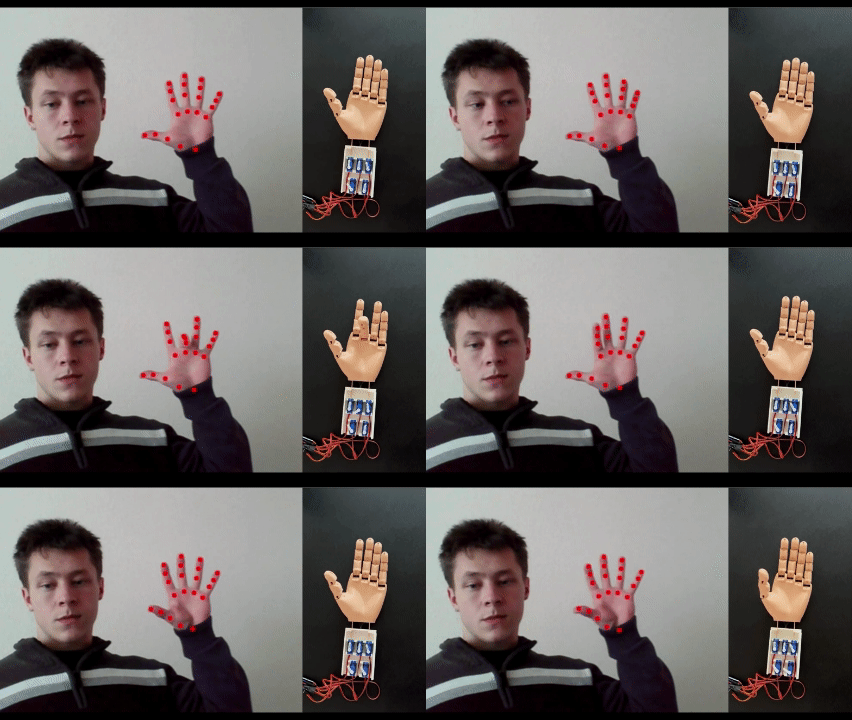
“The idea was to combine motors, the physics of the hand, and artificial intelligence. The hand is a small but essential part of us,” he says. “Down the line, I’d like to build a larger-scale robotic hand with more natural degrees of freedom, not just the fingers, but joints in the palm and a twisting wrist.”
Such work could have applications in a variety of industries, where robotic hands are already being used to manufacture goods, perform medical procedures, or perform dangerous maneuvers in places where human presence might be too risky.
Willamette powers a robotics dream
Fasolt-Holmes became increasingly interested in robotics software engineering as he worked his way through his degree at Willamette, with lessons from each year building upon the last. That strong foundation would launch a career opportunity.
Courses like Analysis of Algorithms with Associate Professor of Computer Science Lucas Cordova provided a foundation in algorithmic thinking that helped Fasolt-Holmes troubleshoot mismatches in computer vision, while Assistant Professor of Computer Science Calvin Deutschbein, his academic advisor, offered courses like Understanding AI that gave him confidence in core AI implementation.
“It began with a dream to somehow get into robotics, but I didn’t know where to start. I didn’t have experience in computer science before coming to Willamette. But every year I became more comfortable with programming and making software decisions,” he says.
Fasolt-Holmes’s hope to work in robotic software engineering was answered by a post-graduation opportunity to work for Toyota Automated Logistics, a subsidiary of Toyota Industries Corporation, where he will install and program warehouse robotics as a software project engineer.
“The market is hard right now, and I faced a lot of rejection. But having this independent project on my resume was infinitely helpful,” he adds. “If I didn’t have the confidence to dive in and try something new, a whole array of opportunities would have never opened. Willamette gave me the confidence to try something like this.”