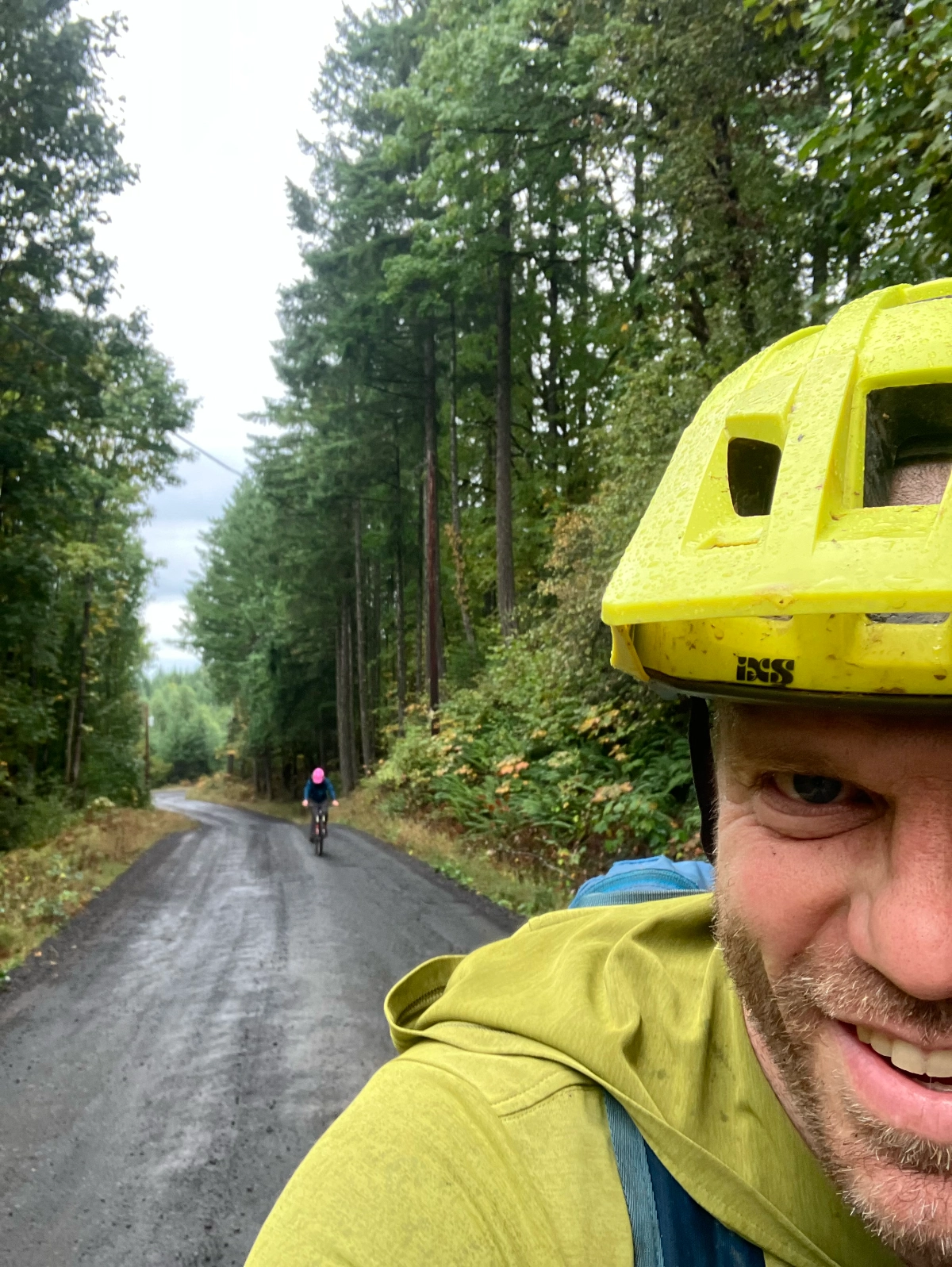
Casey Kulla JD’28 won first place in the Oregon State Bar Sustainable Future Section’s inaugural Law School Writing Competition with an essay on an area of law that’s both a personal interest and crucial to the state of Oregon: water.
“Here in Oregon, we live a life of water extremes: west side is the wet side, east side is the dry side; winter rain, summer drought; irrigators using huge amounts of water compared to urban residents, etc.,” says Kulla.
His passion for sustainability existed long before Kulla came to Willamette University’s School of Law. He is particularly interested in thinking critically about what we are trying to sustain and what kind of planet we want to hand future generations.
Kulla’s understanding of sustainability is also shaped by his experience running Oakhill Organics, a certified organic vegetable and tree fruit farm, alongside his wife from 2006 until 2020.
“I think my understanding of sustainability is shaped by working every day in the rain and the sun to grow food,” says Kulla. “Sustainability is as much about humans and the work of living as it is about stream flows, forests, whales, plastic bags, solar panels, and carbon dioxide.”
When he learned of the essay competition it was easy for Kulla to narrow down his ideas for which policy topic he wanted to tackle.
Turning a dry policy question into a forceful legal argument
In his essay, Kulla focused on House Bill 2169, passed during Oregon’s 2025 legislative session, which established water reuse as state policy. Water reuse involves putting treated wastewater to beneficial use rather than simply releasing it after treatment.
Kulla examined the overlapping responsibilities of Oregon agencies with authority over water quality and quantity, identifying potential conflicts that could slow implementation of the new policy. He then proposed ways agencies and decision-makers could overcome those barriers and create faster timelines and greater regulatory certainty.
His goal was to make what could have been a highly technical essay relevant to a much broader legal audience. Overall, Kulla wanted “people, especially natural resources, environmental, and business transactions attorneys to care about the topic.”
Building practical legal writing skills
Kulla credits his Willamette education with giving him the skills to turn a complex policy question into a concise, persuasive argument that rose to the top of the competition.
“Willamette Law, from librarians and deans to professors and my dear ‘JD 2028’ cohort, made the award possible,” he said. “The community of legal scholars in Salem, curious and practical as they are, embraced me and taught me.”
Assistant Professor of Law Jennifer Stevenson, who teaches Willamette’s first-year legal research and writing courses, was particularly influential.
“She taught me everything I know about legal writing,” Kulla said.
But her lessons went beyond grammar, organization and citations. Stevenson taught students to think about writing as a practical legal skill — something designed for a law firm, a judge’s chambers or a courtroom.
That preparation paid off when Kulla sat down to write his competition essay.
Ultimately, Kulla hopes readers of his essay take away more than an understanding of water reuse. He wants them to recognize that Oregon’s water challenges are shaped by human decisions as much as geography; that water should be treated as the precious resource it is; and that water reuse is one tool among many that can help communities, agriculture and fish-bearing streams adapt to a hotter, drier West.
Most importantly, he believes regulatory barriers can be overcome. It takes attentive leadership, dedicated public servants and committed stakeholders.