At the center of Salem’s art community is one of the region’s leading art museums — the Hallie Ford Museum of Art (HFMA). As an art museum on a liberal arts campus, the HFMA brings together art, culture, and scholarship in one holistic package. Since opening its doors in 1998, the museum has been a space featuring artists from across the nation, highlighting the voices and work of indigenous artists in the region, and connecting the public and campus community alike with engaging arts programing.
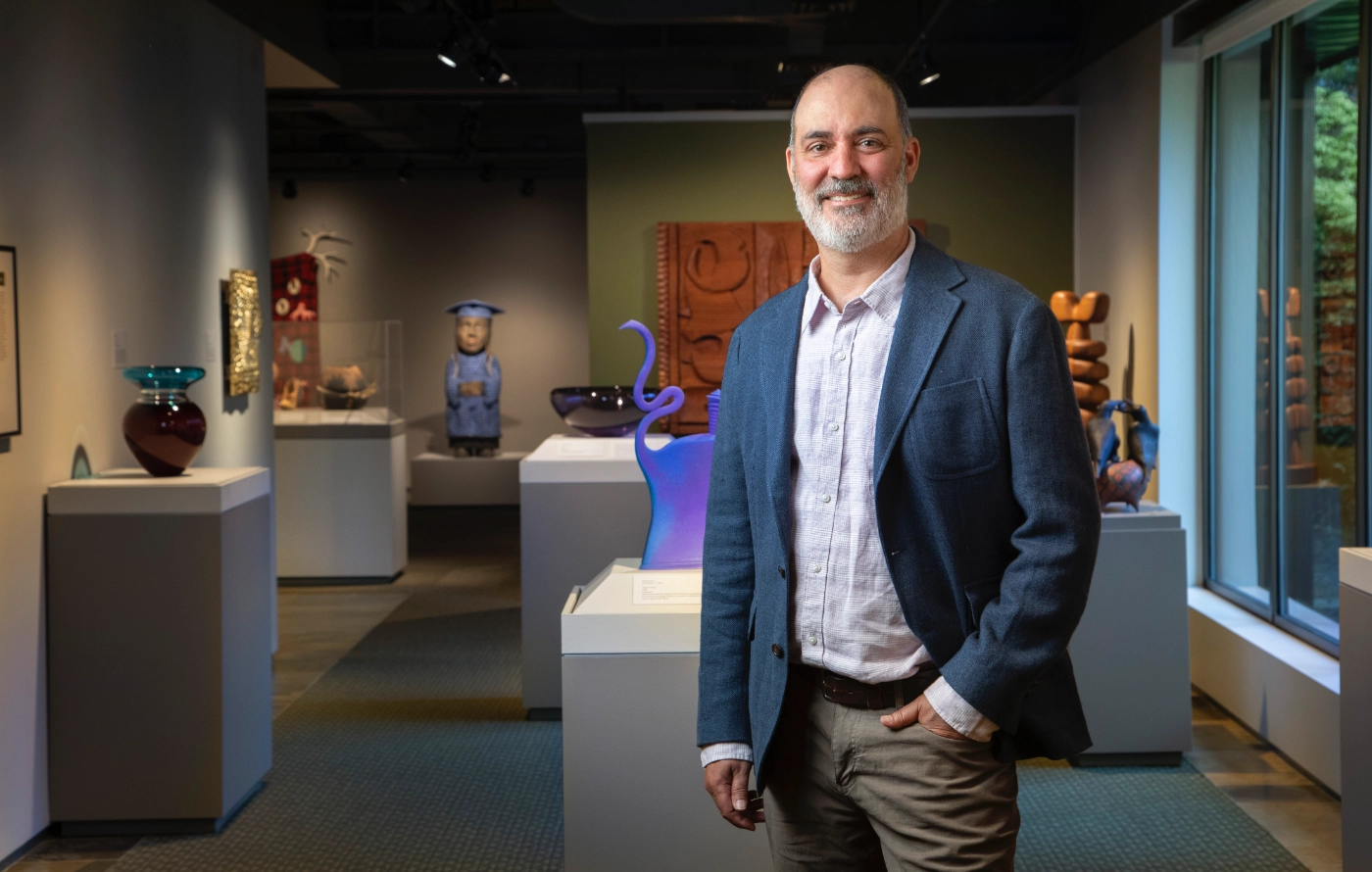
When the founding museum director John Olbrantz announced his retirement, Willamette University didn’t need to look far when finding the right person to write the museum’s next chapter. That person was already on staff. A curator with twenty years of experience at HFMA, and more than three decades of academic museum and curatorial work in his career, the museum’s new Maribeth Collins Director Jonathan Bucci will use his institutional knowledge as the foundation on which to build his vision for the future of the museum.
“As a curator and as an artist myself, I have always been interested in looking at how our shared humanity connects us. I’m excited about how we can best use our collections, exhibitions and programs to reach new audiences,” says Bucci. “Having the trust of my community to lead the museum — which has a stellar reputation in the region — is a truly amazing opportunity. I’m honored to steer the museum into its next chapter.”
Building community through art
Since its founding, HFMA has played a leading role in supporting artists and the art history of the Pacific Northwest, through collections, exhibitions and publications that document the regional art scene. This dedication to Northwest art is central to the museum’s vision, giving it a unique identity and excellent reputation in the region and nationally.
Bucci's long-standing relationship with the Salem community and experience in higher education gives him an uncommon perspective as he takes on this new role. He plans to continue the museum’s work to build relationships and partnerships on campus as well as to expand its impact within the local community and beyond.
“The dedicated work of HFMA staff and faculty curators over the last 28 years has made the museum an integral part of the cultural landscape of the Northwest,” says Bucci. “I intend to maintain this same level of integrity and build upon the foundation John Olbrantz established. John has also built a strong network of support for the museum. I look forward to working with these members, artists, donors and other supporters as we move into the future.”
A jewel of the Willamette campus
When Bucci joined the staff at HFMA, the museum had only been open for eight years. Although it was already establishing a strong reputation for excellence in exhibition and curation, the staff were still very much in a program-building stage. His long tenure at the museum means that Bucci has watched it grow over time, and that institutional knowledge keeps him grounded in the important part HFMA plays in the community and on campus.
Bucci enjoys working with artists and collectors, as well as engaging with the broader arts community. However, he finds working within higher education brings an important dimension to his work.
“One of the most rewarding aspects of spending my career within a university setting has been working with students who are interested in the role of art museums in their communities,” says Bucci.
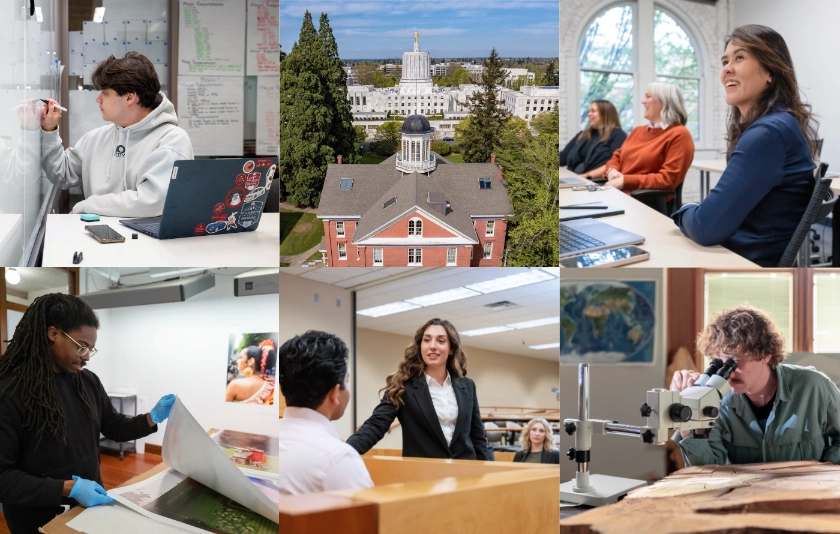
The museum offers opportunities for students at Willamette’s Salem campus to engage with art regardless of their major. Beyond access to exhibitions and class visits, the museum offers students internship opportunities, a partner for research projects, and has served as a venue for film nights, poetry readings and other events. Each spring senior Studio Art majors mount an exhibition of their work, mentored by HFMA staff over the course of the year.
Focused on the future
As Bucci settles into his new role he isn’t resting on his laurels. His focus for the near future is on building new curatorial relationships, filling key roles within the museum staff, and developing new relationships both on and off campus. He is looking to find ways to integrate the museum with student life, so that the space is not only seen as an academic setting. He also wants to find ways to invite the various communities the museum serves to come together.
Working with Professors Wendy Petersen-Boring and David Gutterman, the museum will be hosting a community conversation event in connection with the exhibition What Do We Hold? A Community Conversation. The exhibition was created in partnership with Petersen-Boring and Gutterman, The Conversation Project, and The Office of Civic Engagement.
In addition, the museum recently completed a major reinstallation of the Confederated Tribes of the Grand Ronde Gallery with a new exhibition titled Generations: Indigenous Art from the Permanent Collection. Upcoming exhibitions at the museum include several exhibitions curated from the permanent collection as well as a major exhibition of figurative art from the West Coast that will open in the summer of 2027 titled American Graphic: New Figuration in the West, 1970s to 90s. The exhibition looks at the cartoonish, politically infused figurative work that emerged up and down the West Coast in the late 20th century.
“University museums are where the academic world and the public meet,” says Bucci. “I am excited about bridging that space through collaboration and mentoring, as I shepherd HFMA into the future.”