Oregon and the Pacific Northwest continue to set records for warm summers plagued by extreme heat events and drought. As Oregon’s fourth most vulnerable county to extreme heat, Marion County is disproportionately affected by climate impacts. In the agriculturally rich Willamette Valley, extreme heat events disrupt farm and field work by creating hazardous working environments, and many homes in the area are not equipped with air conditioning, making vulnerable populations even more at risk of adverse effects.
“Extreme heat is the leading weather-related killer in the United States right now,” says Nicole Iroz-Elardo, Assistant Professor of Public Health at Willamette University. “It is only expected to get worse as climate change intensifies, and the impacts vary quite a bit across our city and county.”
Over the summer, Willamette University students, faculty, and staff partnered with the City of Salem and Marion County to collect valuable data and engage the public in order to help mitigate the impacts of extreme heat in the community. Combining public education with interdisciplinary collaborative field research, the work illustrates Willamette’s approach to civic engagement and student-faculty research: bringing students out of the classroom to learn by doing and tackle urgent, real-world challenges.
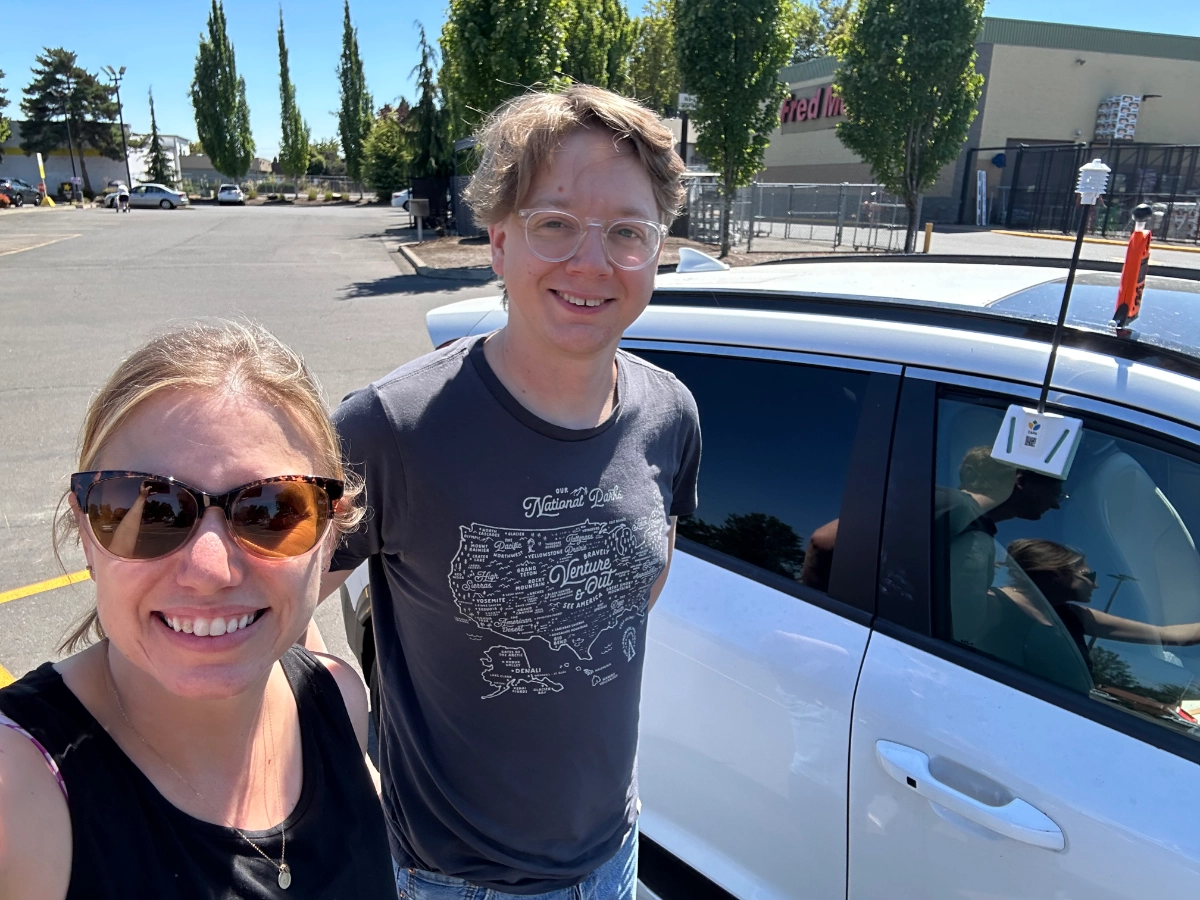
Interdisciplinary research and community engagement inform local climate policy
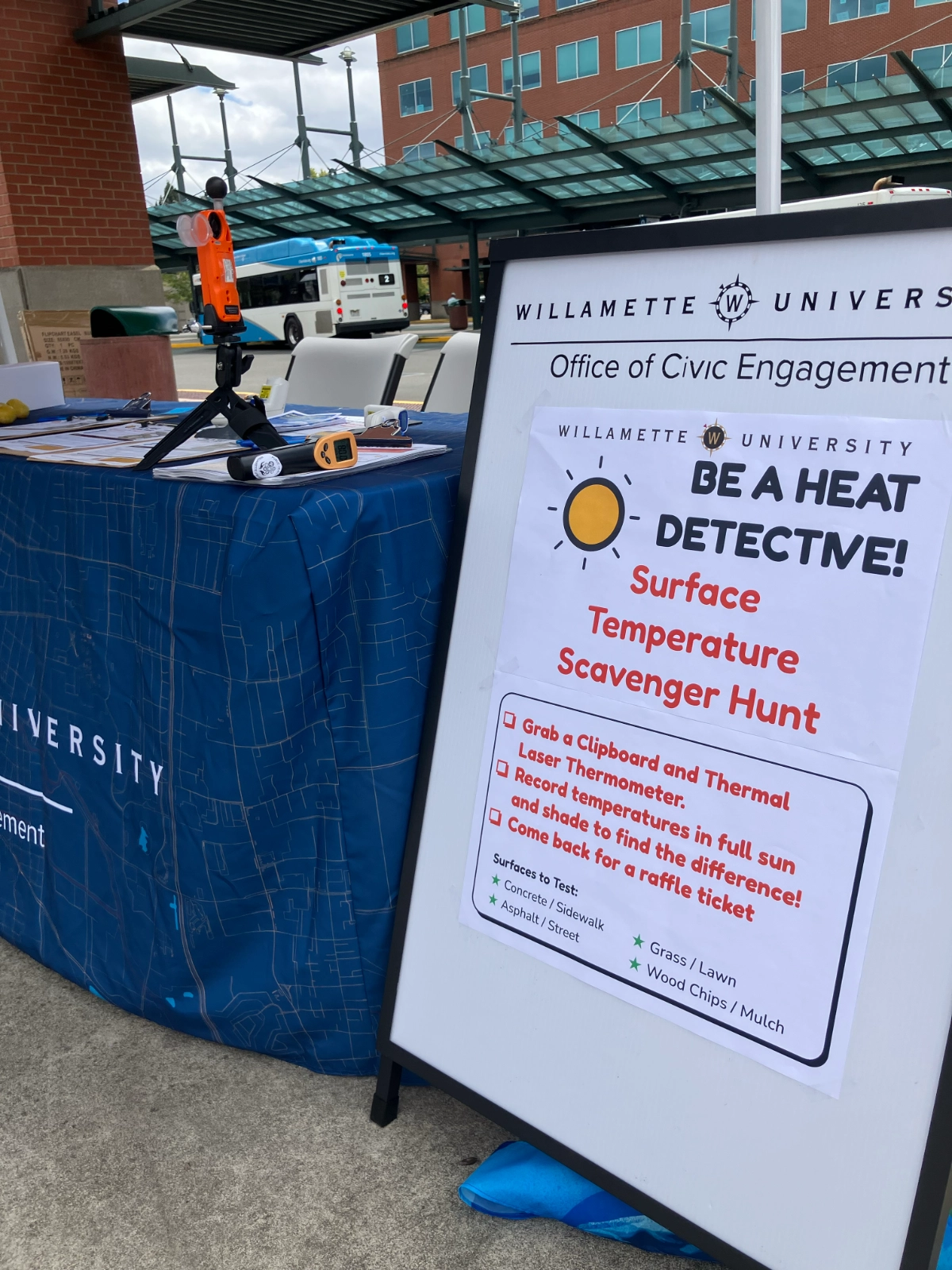
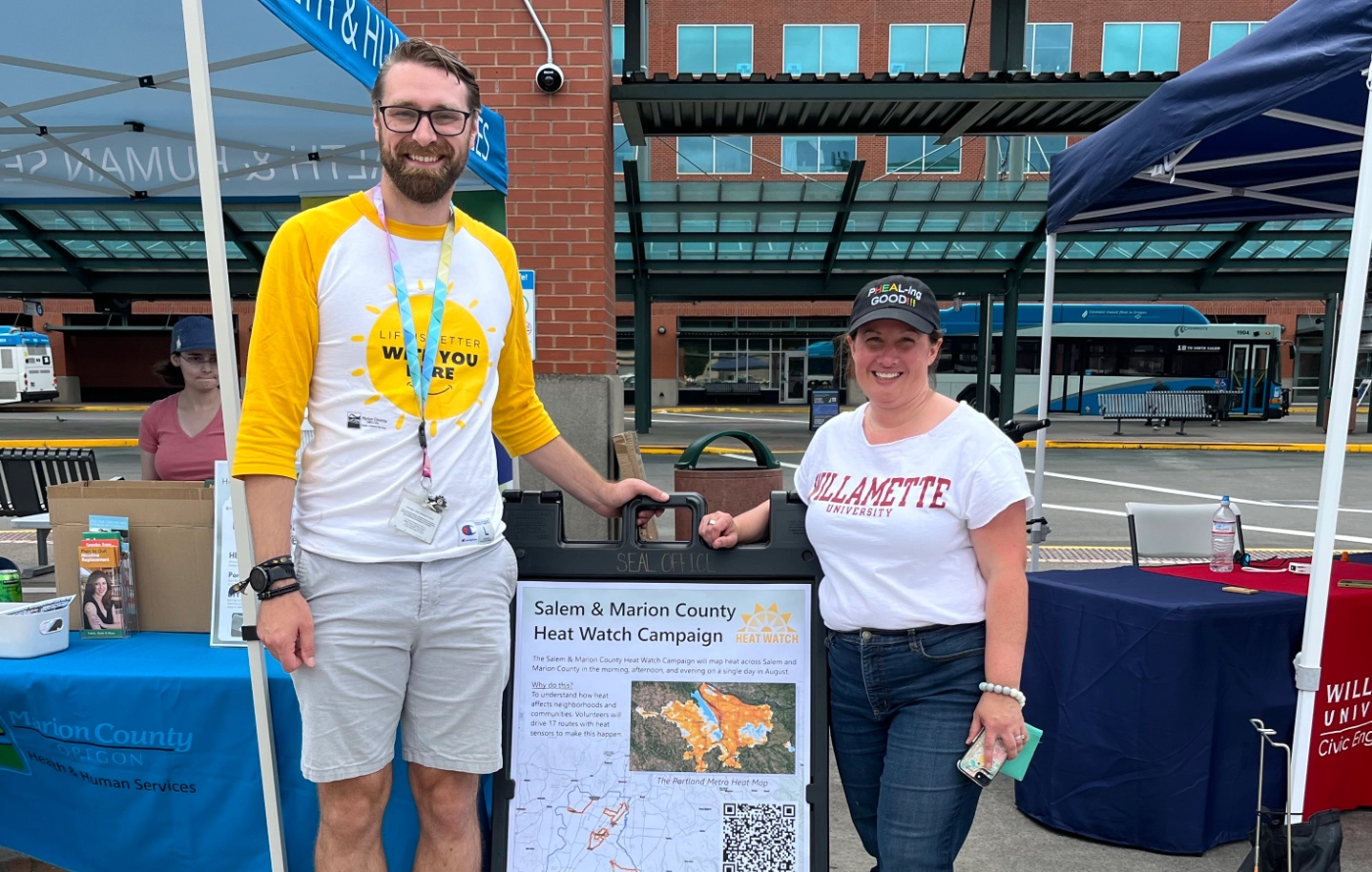
Willamette’s Office of Civic Engagement joined the Marion County Heat Awareness & Resource Fair to raise awareness about how to safely manage heat in homes and communities. Students Brooke Proctor BS/MS’26 and Lucca Braudagan BS’27 joined Willamette faculty and staff in leading hands-on activities to educate families about the urban heat island effect. Using infrared thermometers, children participated in a scavenger hunt to understand how the built environment raises city temperatures and how shade can mitigate those impacts.
“As a public health minor, I enjoyed being able to meet community partner organizations and work on outreach to members of the Salem community who may not have been aware of some of these resources,” Braudagan says.
The outreach was coupled with the city-sponsored Heat Watch, a collaborative research project that took researchers and volunteer “street scientists” across the county to take measurements in various locations at different times of day. The goal: to collect data for Marion County's first-ever heat map. This mapping will directly support the City’s Climate Action Plan and the County’s Climate and Health Adaptation Plan, informing future interventions like strategic tree planting and targeted cooling resources.
During the Heat Watch, Iroz-Elardo, alongside environmental science faculty Katja Meyer, Melinda Butterworth, and Alexander Sodeman, conducted their own data collection pilot project, taking additional heat measurements. Nevellie Larson BS’28 and Burton Hirsch BA’28, working under Assistant Professor of Environmental Science Michelle Talal as part of Willamette’s Science Collaborative Research Program (SCRP), prepared campus equipment for use on the project. Students and faculty used Willamette’s Kestrel 5400 heat stress trackers — handheld meters often used to detect unsafe heat-related conditions in industrial, athletics, and military settings — to collect data for the pilot project.
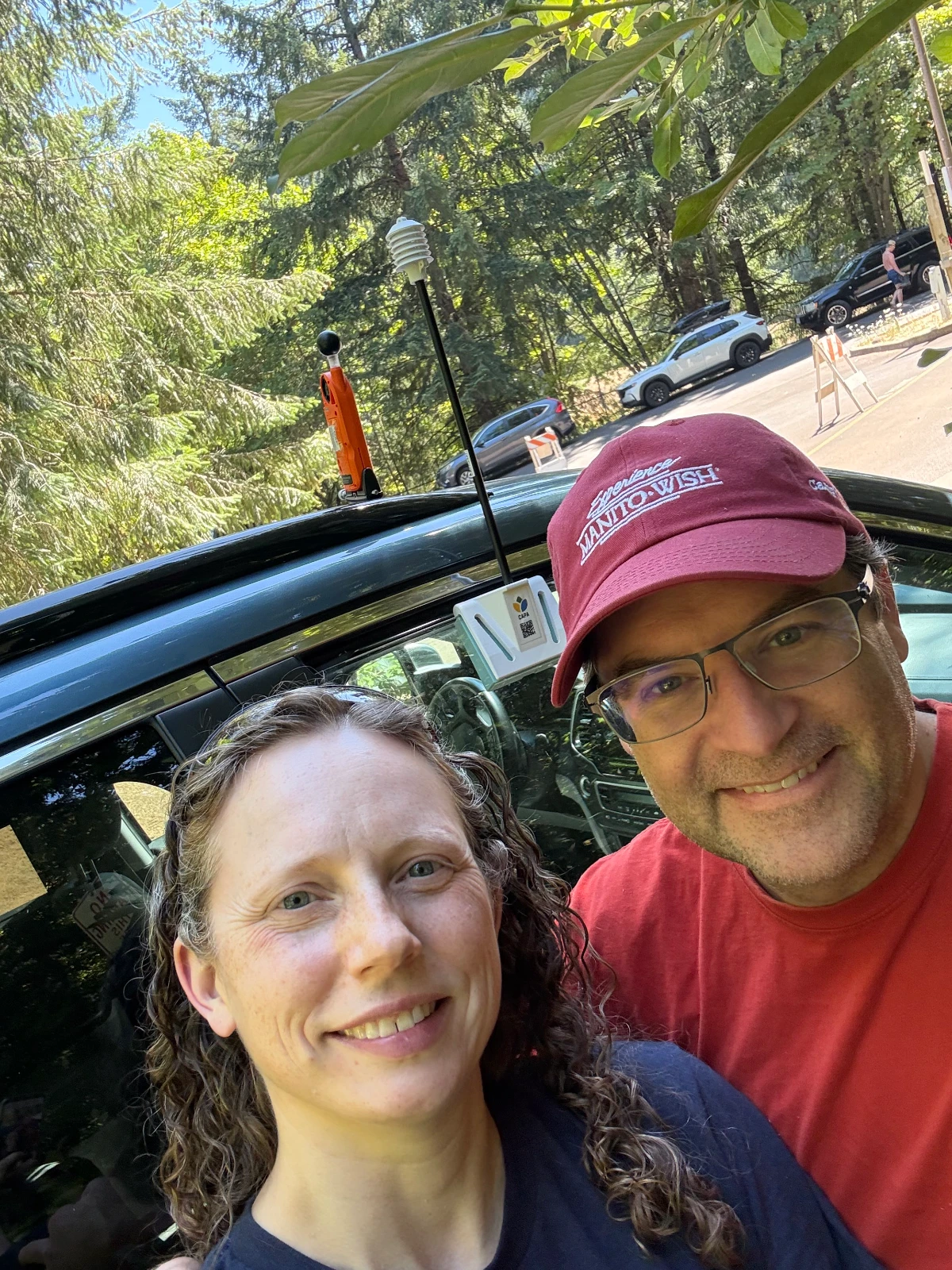
“Heat is such a prevalent issue, especially in cities, so being a part of the process to make a change that I will eventually see is really special,” Larson says.
Iroz-Elardo says that data collected with the equipment will be used by Willamette faculty for further research. Willamette researchers plan to update the heat maps as needed and confidently collect data to fine-tune heat exposure estimates for places like parks, agricultural settings, and fields where farmworkers are laboring.
“Willamette University staff and students are an invaluable part of the Climate and Health Adaptation Plan and our efforts to create real-world solutions to increasingly hazardous climate events,” said Michael Keuler, Environmental Health Resiliency Coordinator with Marion County Health Promotion & Prevention Services. “The future is bright, and hopefully cooler, with Willamette University’s continued partnership in building resilience to climate hazards.”
Bringing together students, faculty, and the community, the research and public education efforts exemplify Willamette’s motto: Not unto ourselves alone are we born. Through interdisciplinary collaboration, the projects showed how breaking down silos can help inform real-world solutions to complex challenges.
“I'm excited to collaborate on campus and off to help our communities prepare for and adapt to extreme heat,” says Iroz-Elardo. “I'm looking forward to analyzing the data, which will hopefully lead to more ways we can learn about and protect our communities.”
Top photo caption: Assistant Professor of Public Health Nicole Iroz-Elardo with Marion County Environmental Health Resiliency Coordinator Michael Keuler at the Marion County Heat Awareness & Resource Fair.
Editor's note: Special thanks to Nicole Iroz-Elardo, Michael Keuler, and Julianah Douglas for assisting with this article.