Nick Beswick-Seidl BS/BA’26 defies easy categorization. When the Biology and Chemistry double-major isn’t hitting the books he’s hitting the field as a member of Willamette’s football team, all while presenting his research at academic conferences. For Beswick-Seidl, this trifecta of achievement is all part of the Willamette experience.
Last year, Beswick-Seidl was among twelve students out of nearly 400 nominees for a competitive research award by the US Aquacultural Society (USAS), securing an invitation to present at the Triennial Aquaculture Conference in New Orleans. He was the only undergraduate student competing against more experienced graduate students. By the end of the conference, Beswick-Seidl had won Best USAS Student Abstract for his study of the Queen Milk Conch, a large edible sea snail critical to the diets and economies of several Caribbean nations and rapidly disappearing due to overfishing. Beswick hopes his work could help reverse that decline.
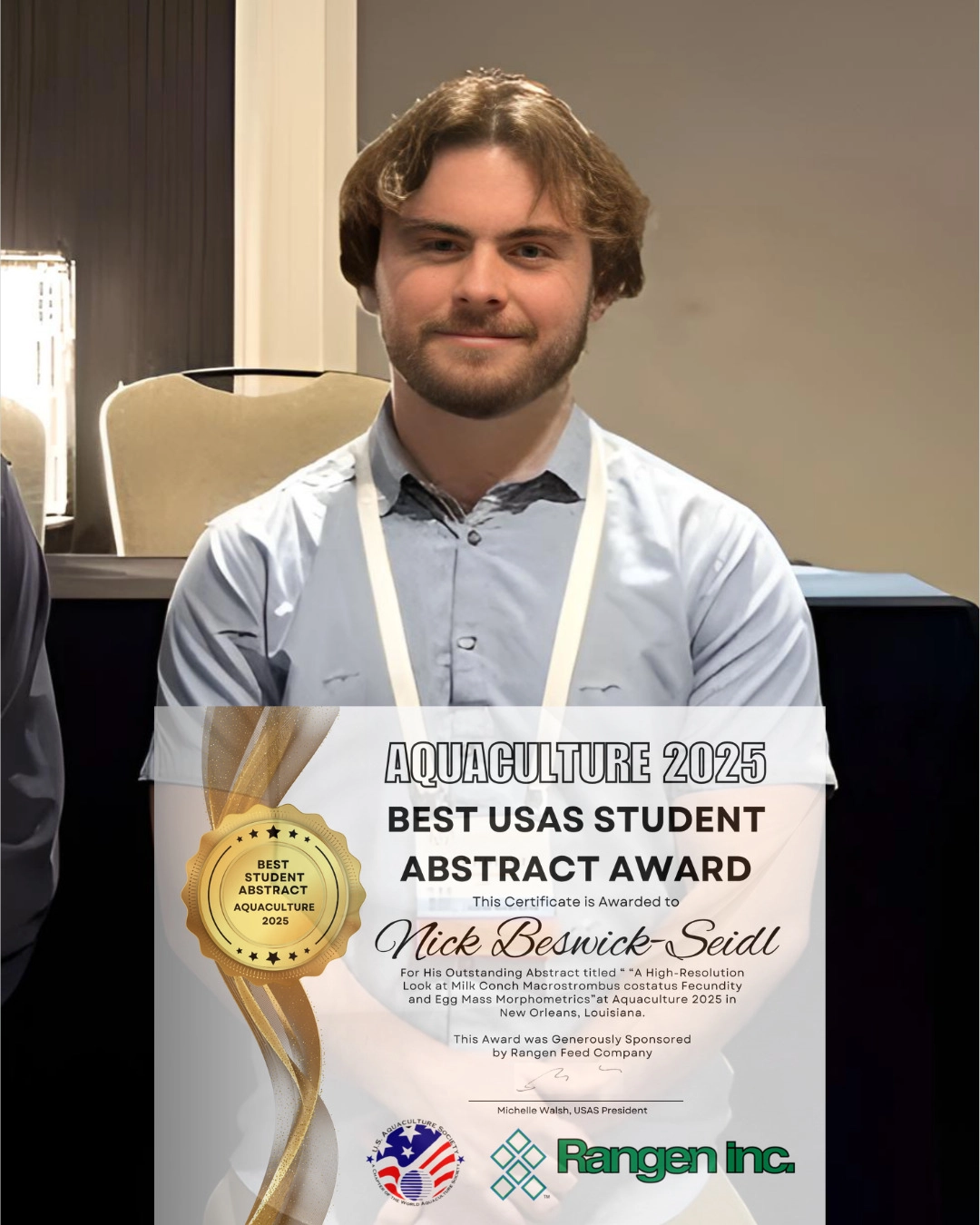
“My project focused on analyzing the quality and characteristics of Milk Conch egg masses using a microscope and within aquaculture systems,” says Beswick-Seidl, who completed his research during the summer of 2024 under renowned Queen Conch researcher Megan Davis as part of Florida Atlantic University’s Harbor Branch Oceanographic Institute.
“The Queen Conch is widely-consumed, given that Caribbean nations rely heavily on seafood,” Beswick-Seidl adds. “They are slow-moving gastropods living in shallow water: they’re vulnerable to overexploitation as an easily harvested food source.” His research gives insight on how conch egg masses can be effectively grown in labs to then restock wild populations.
Beswick-Seidl, who has maintained hobby aquariums and grown coral since middle school, pursued the research opportunity in Florida due to his passion for marine science and the natural world. For him, the path from childhood hobby to groundbreaking research wasn’t accidental, it was cultivated at Willamette.
“Willamette’s Biology and Chemistry curriculum put a lot of emphasis on conducting your own experiments and writing about them,” he says. “For example, in Biological Inquiry, we conducted our own research projects with guidance from our professors throughout the semester. The Chemistry department also guided me through the process of writing a scientific paper on an experiment.
Conducting quality research is only half the battle. Through courses like Experimental Techniques, Beswick-Seidl learned the art of communicating his research with other scientists.
“If you can’t communicate what you’ve done and what you’re researching, your work falls short,” he says. “It prepared me to undertake the project at Florida Atlantic and eventually write the research paper.”
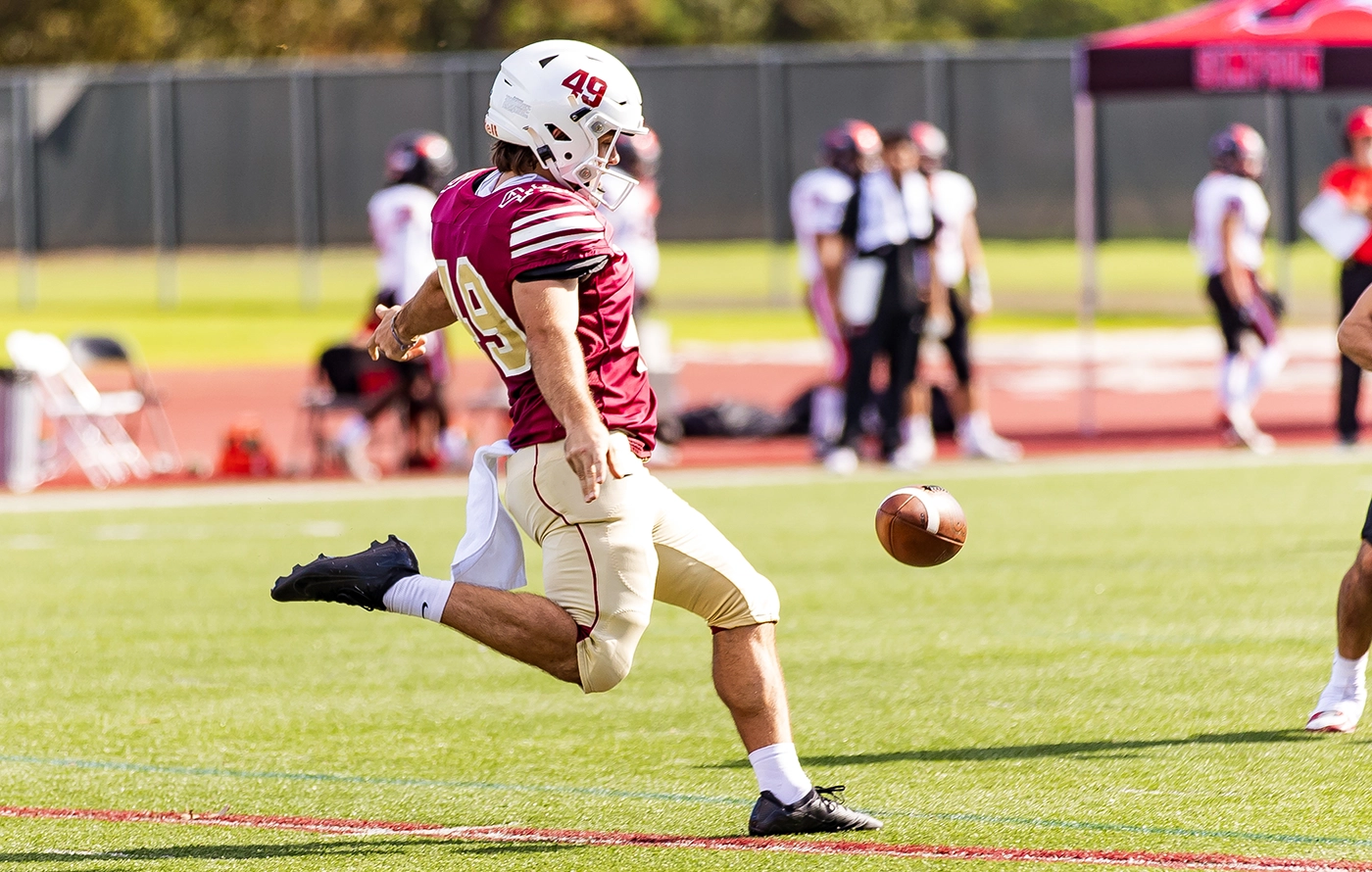
Amid such a rigorous curriculum, it may come as a surprise that Beswick-Seidl still finds time to be a kicker and punter on Willamette’s football team. The chance to continue playing football while undertaking this work is part of the reason he applied to Willamette in the first place. “I enjoy being active, I enjoy playing the sport. But it’s really the community aspect that I love. It’s why I've stuck with it even through a few tough years when I first joined,” he says.
Beswick-Seidl looks forward to further research, starting with a senior thesis under the guidance of Associate Professor of Biology Jason Duncan on the small salt water anemone Aiptasia and how it can model new methods for helping coral regain their symbiotic relationship with algae after a bleaching event, work that could prove vital as climate change threatens reef ecosystems worldwide.
From a middle-schooler tending to his home aquariums to an award-winning researcher charting solutions for vulnerable marine populations, Beswick-Seidl’s journey shows what’s possible when passion meets opportunity.