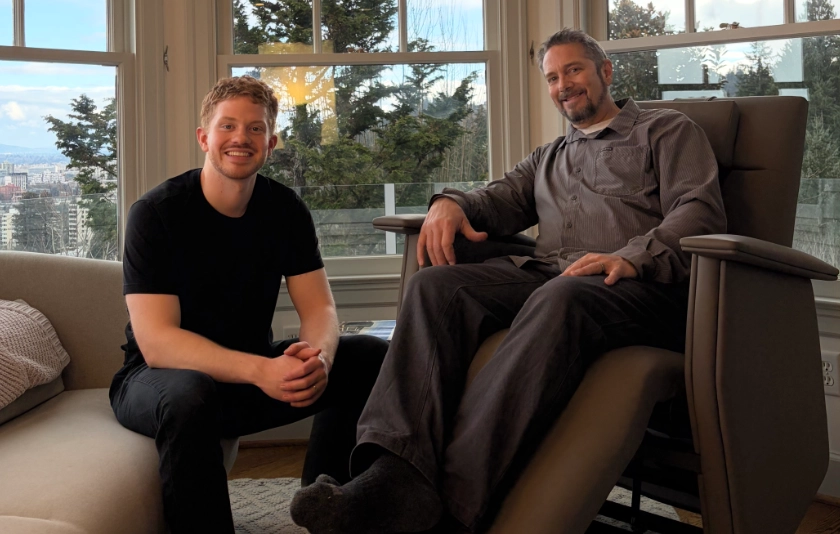
In the wake of the COVID-19 pandemic, Misty Wharton, the then superintendent of the Nestucca Valley School District, had a problem. From masking to food safety, her small rural community on the Oregon coast was divided in ways that seemed unresolvable. Wharton had tried everything: meetings with parents and teachers, community gatherings — even town halls titled “Why Are You Mad?"
Then, she heard a radio interview on OPB’s Think Out Loud about a class at Willamette University called The Conversation Project, and she thought she might have found something that could help bridge her community’s deep fissures. She called up project co-founders Professor of Politics, Policy, Law, & Ethics David Gutterman and Lindsay and Corinne Stewart Professor in the Humanities Wendy Petersen-Boring to ask for advice.
A few months later, students Kate West BA’26 and Lesly Cordero-Lagos BA’26, then sophomores, were standing in front of a room full of community members in Nestucca, facilitating exercises that asked parents, neighbors, and concerned citizens on opposite sides of issues to share and listen to one another’s stories.
Rather than focusing on directly addressing policy disagreements, the method at the heart of The Conversation Project involves the deceptively simple practice of listening in order to find the glimmers of shared humanity that underlie our differences. To help uncover the layers underneath the policy divide, the facilitators asked Nestucca residents to share a story about a teacher who meant something to them or a responsibility they carried in their lives.
The stories brought out powerful moments of connection and helped neighbors see one another in a new way. For West, the experience showcased Willamette’s experiential approach to education — trusting undergraduate students with the agency to step out of the classroom and facilitate high-stakes interventions in the real world.
“Being able to be a second-year undergraduate student involved in a project that felt like it had a real impact in the wider community was really important to my understanding of the work,” West says. “Building my confidence as someone who could make a significant change and to be trusted with that responsibility as a student was huge.”
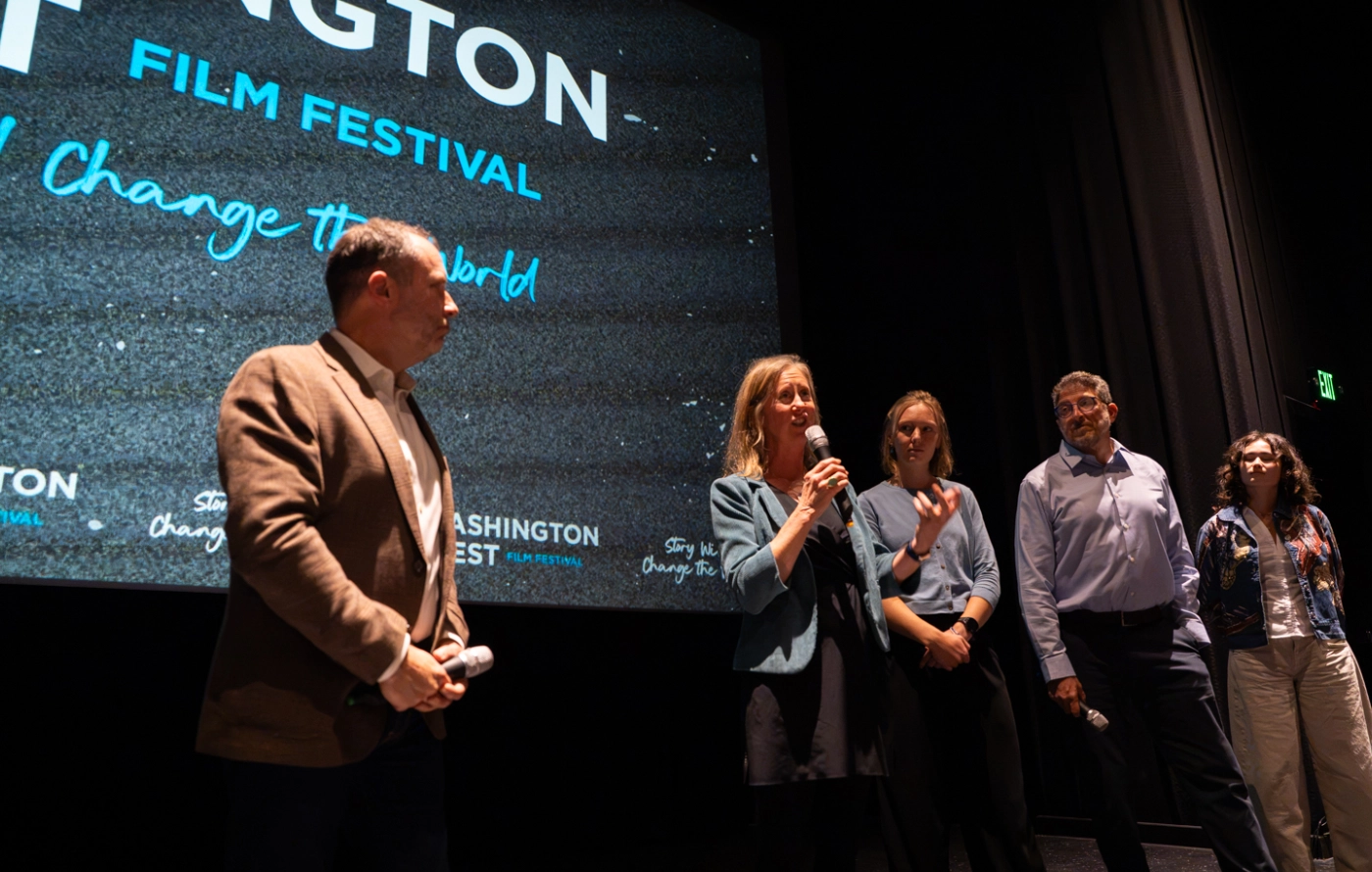
That story of The Conversation Project’s work in Nestucca is captured in the new documentary film The Stories We Carry, which premiered Oct. 10 at the Washington West Film Festival in Washington, D.C. and was recently shown at a community event on campus in Salem. Through interviews with students, glimpses into the Willamette classroom, and the journey to Nestucca, the film shows how one interdisciplinary Willamette program is empowering students to create ripples of transformation beyond campus.
‘The Stories We Carry’
The film, directed by award-winning documentarian Davey Schaupp, follows three Willamette students during their senior year — West, Kaitlin Imai BA’26, and Sawyer Garrison BA’26 — capturing the culmination of their years participating in the program. In it, the students share their experiences learning about the power of story and finding community with one another in the Conversation Project.
“This is a project that has changed my life and this is unlike any classroom, any community, that I’ve ever been a part of,” Garrison says in the film.
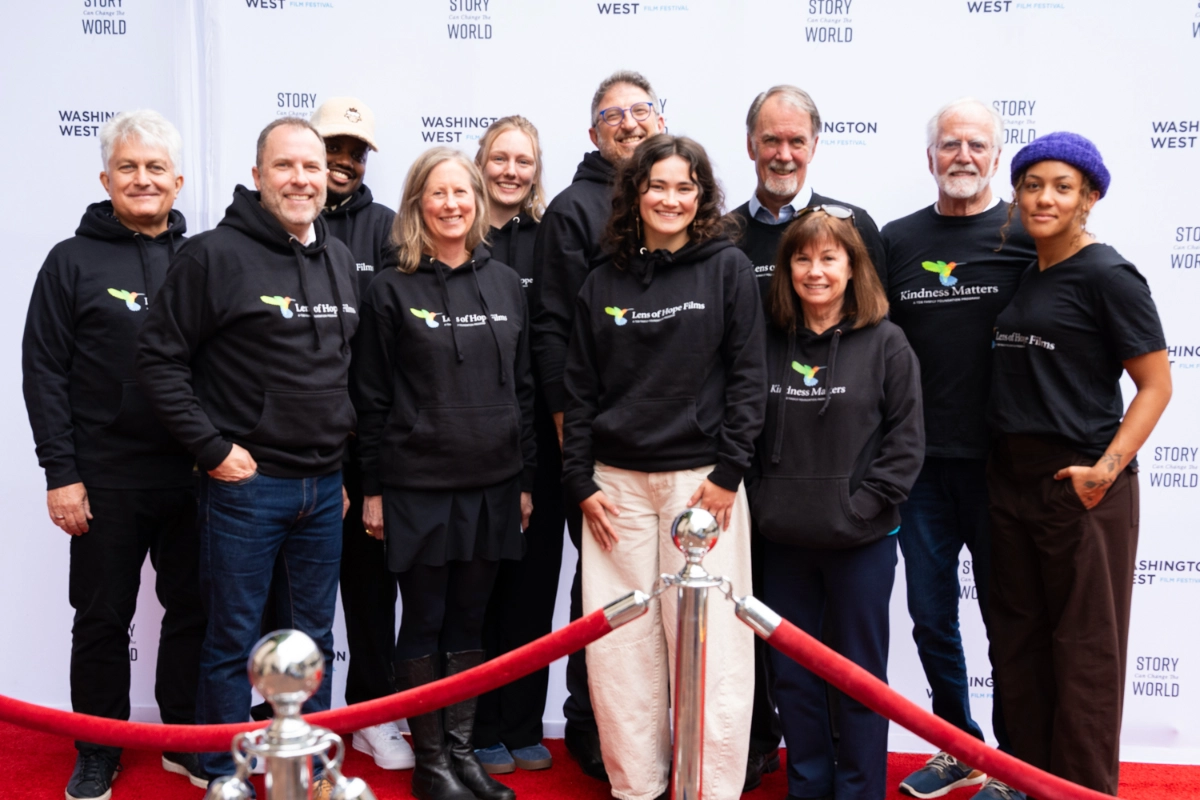
The film came out of a happenstance encounter at the Telluride film festival, where Petersen-Boring met Terri Bullock, president and founder of the TDB Family Foundation, an organization that works with artists to promote empathy and compassion in society. The Foundation became an enthusiastic supporter of The Conversation Project’s mission, and suggested a film to help tell the Project’s story.
“They've been so intentionally involved throughout this entire process, and it's been so wonderful to get to know them and also to have people believe deeply in what you're doing,” Imai says.
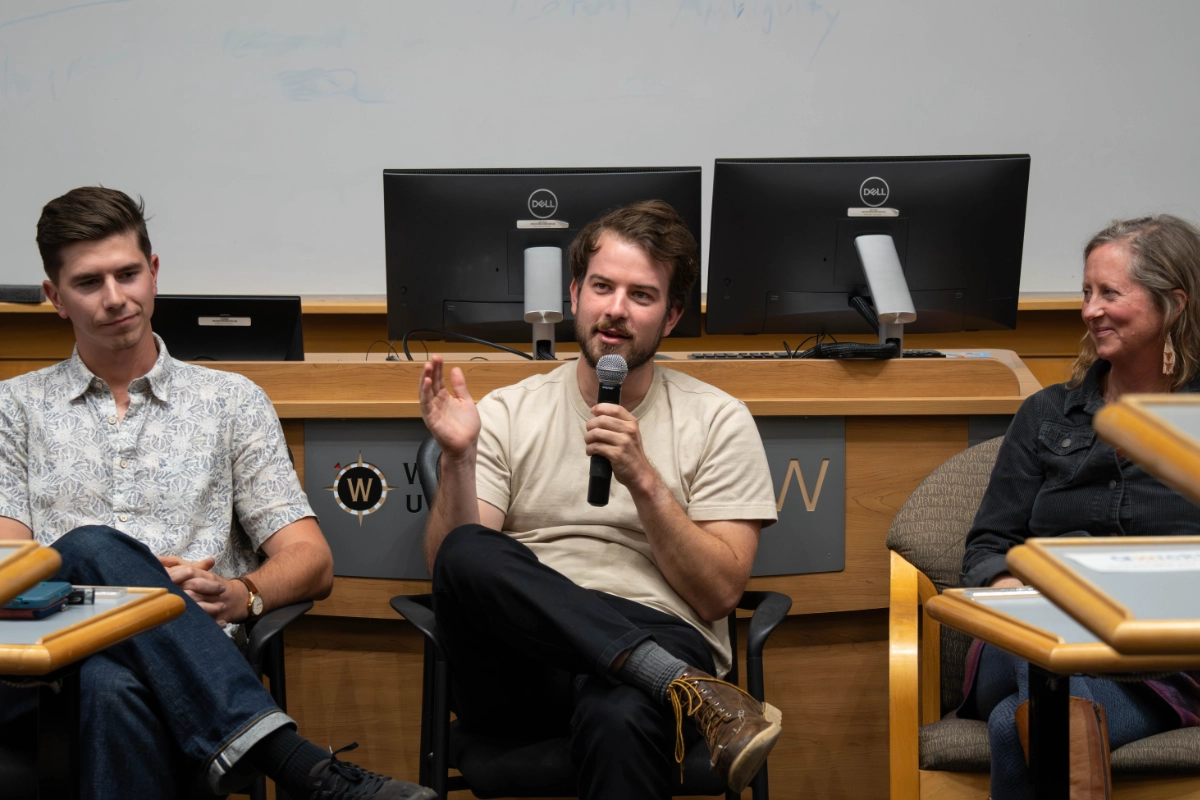
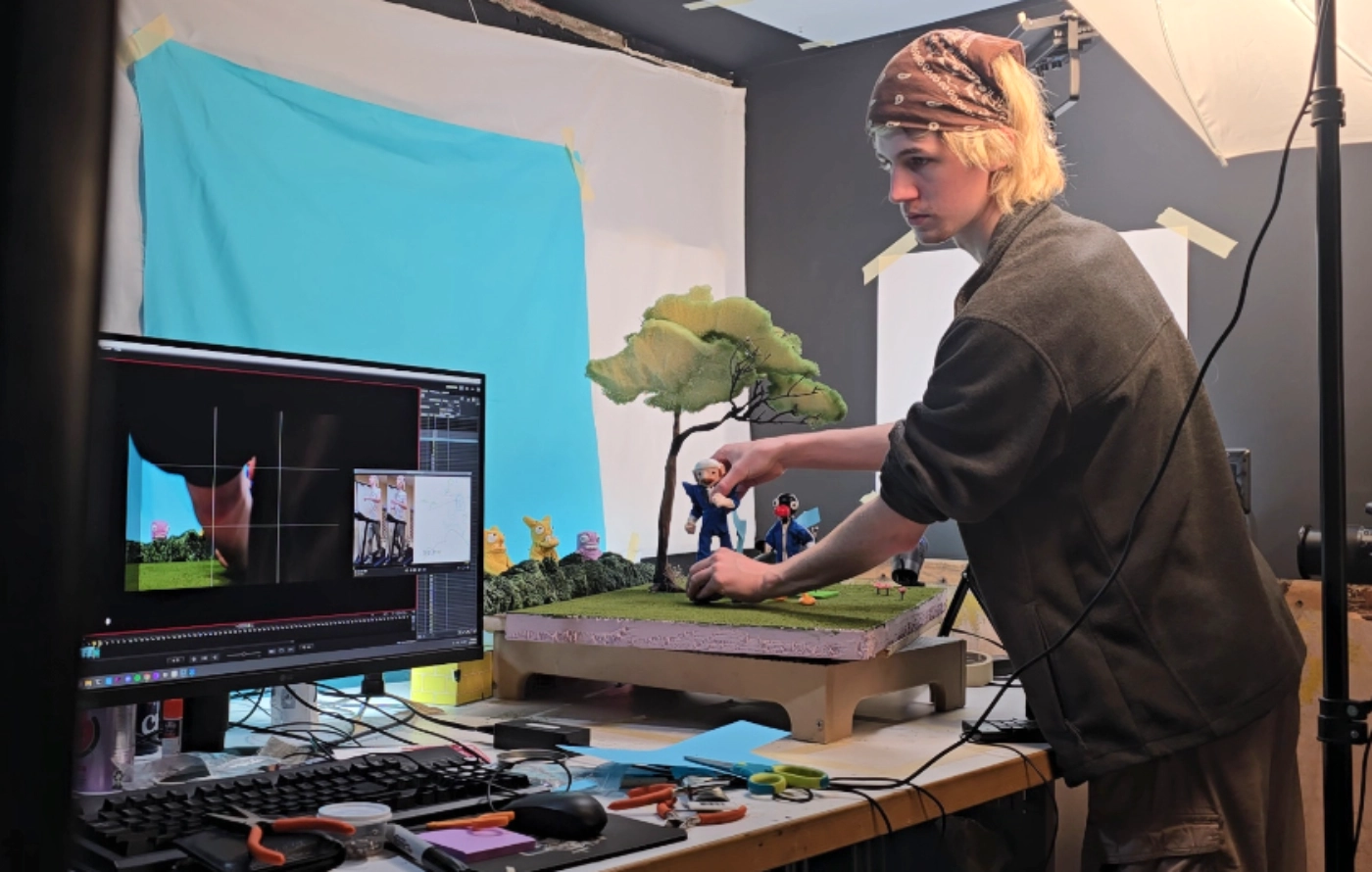
The filmmakers also maintained a collaborative approach throughout post-production, seeking student and faculty feedback to ensure the final product authentically captured both the challenges and the joy of the work. Willamette was represented in the film’s crew as well: Pacific Northwest College of Art graduate Jason Scheurman BFA’21 served as the film’s designer, and Cinema Studies and Civic Communication & Media double major Jordan Pierson BA’26 worked on the film as a production assistant.
Gutterman and Petersen-Boring hope the film will help bring The Conversation Project to new audiences, giving future students opportunities to partner with organizations to bring workshops to new communities.
A lifetime of listening and learning
Beyond the film, The Conversation Project has been a launching pad for students to turn knowledge into action. Students walk away with a set of lifelong practices for approaching and navigating difficult conversations. Many find themselves empowered to bring those tools to their own communities.
For Imai, The Conversation Project introduced her to a set of career pathways she never knew existed. Through a trip to Ireland’s Corrymeela Community peace and reconciliation center, Imai witnessed firsthand how peacebuilders have addressed conflict and built community around the world.
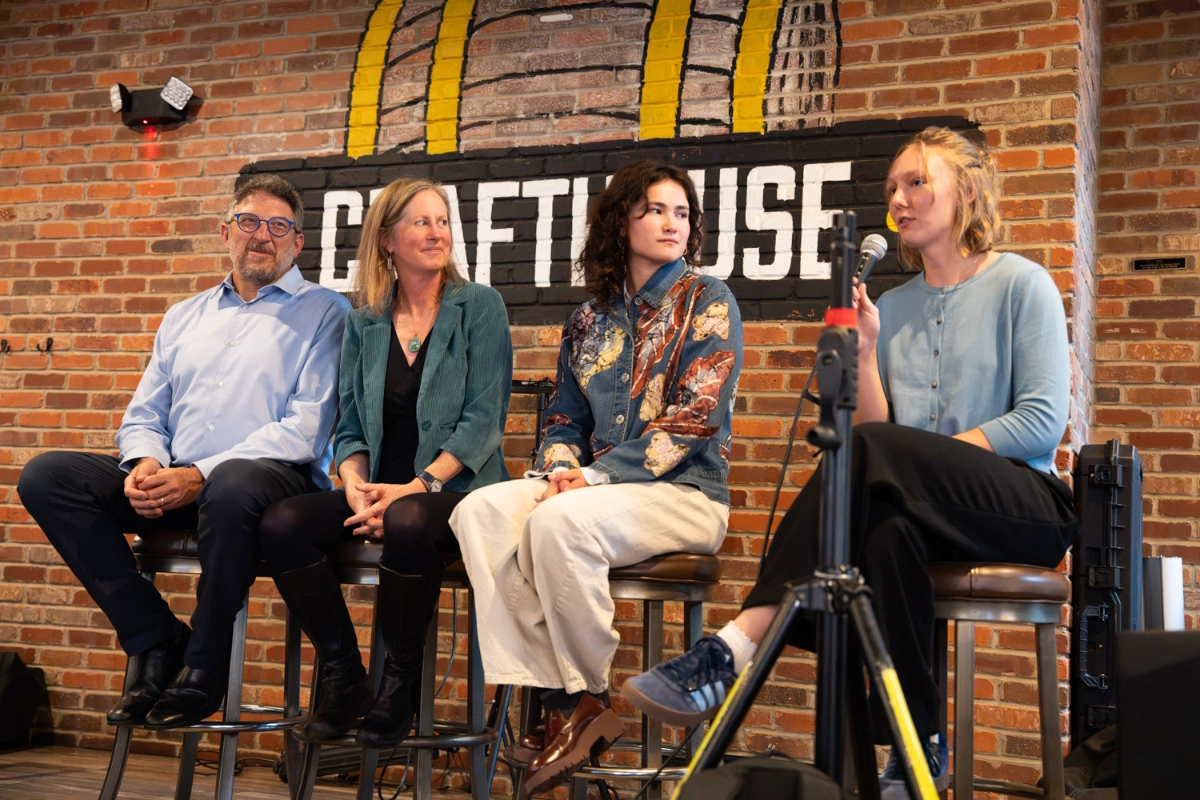
“As a student not really knowing what I wanted to do or what spaces I really wanted to try and get into, being able to be around people who have had careers doing this work was such a gift,” Imai says. “Seeing how invested people are in creating a better world and in building community in their own work is one of the opportunities I was afforded with The Conversation Project.”
West is bringing the practice of story listening to a graduate program at the Candler School of Theology at Emory University. There, she’s working as a chaplain intern at a youth detention center, helping support young people in custody. Inspired by The Conversation Project, West is always listening, and always learning.
“All of us are forever and always a student of this work,” West says. “I am constantly being humbled by the ways in which I have so much to learn, but I feel well equipped to recognize that.”
Now, as Gutterman and Petersen-Boring seek to bring the film to new audiences through festivals and other public screenings, The Conversation Project continues to serve as an example of Willamette’s motto: Not unto ourselves alone are we born. It’s a unique space where students can carry each other’s stories and use them to lift up the communities around them.
To learn more about the film, host a screening, or get a copy of the film’s discussion guide, visit the film’s website.
Watch The Conversation Project in action
Hear faculty and students talk about The Conversation Project in their own words in clips from the film The Stories We Carry.