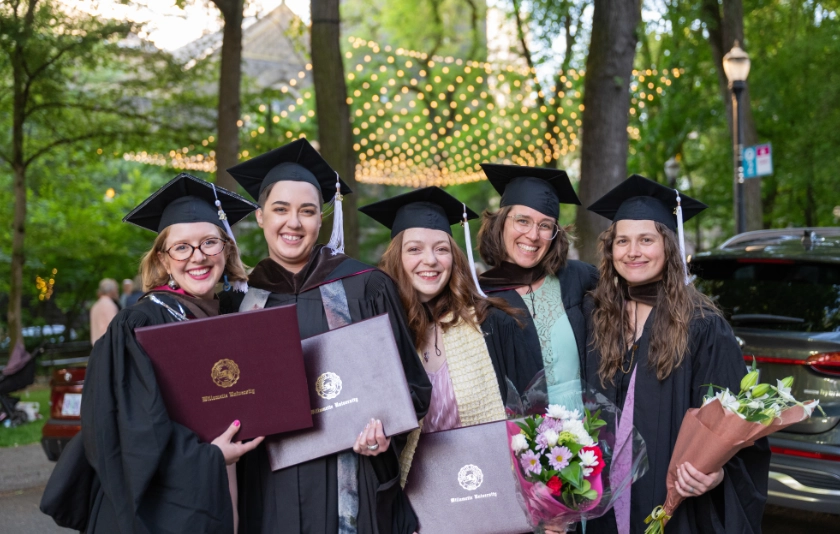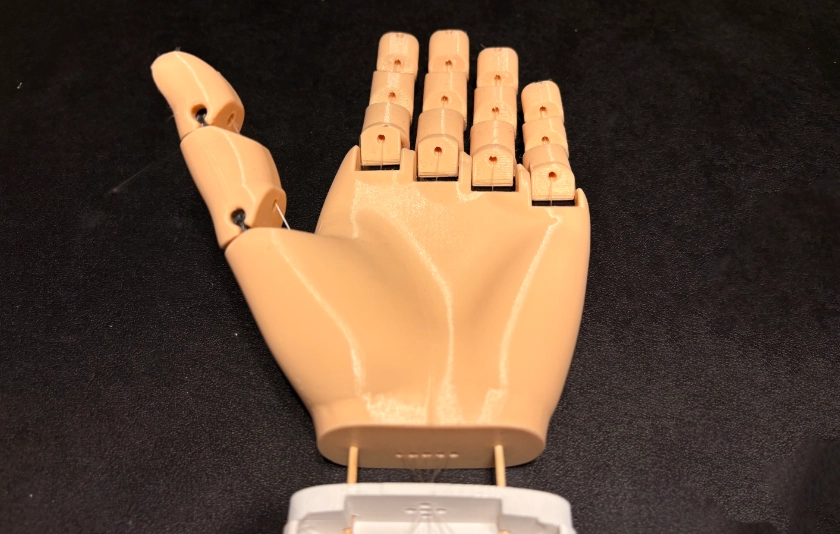
Through a robust lineup of career design programming, Willamette University’s Pacific Northwest College of Art (PNCA) serves as a vital source of connections, providing students with the practical knowledge and industry access needed to thrive as working professionals.
To succeed in an ever-changing global landscape, emerging creators must develop a versatile set of knowledge, skills, and experiences. PNCA’s dedication to experiential learning connects classroom learning with real-world applications. The Office of Career Design, serves as a conduit between the classroom and the workforce by providing programming and dedicated advising that addresses current workforce needs while anticipating future trends.
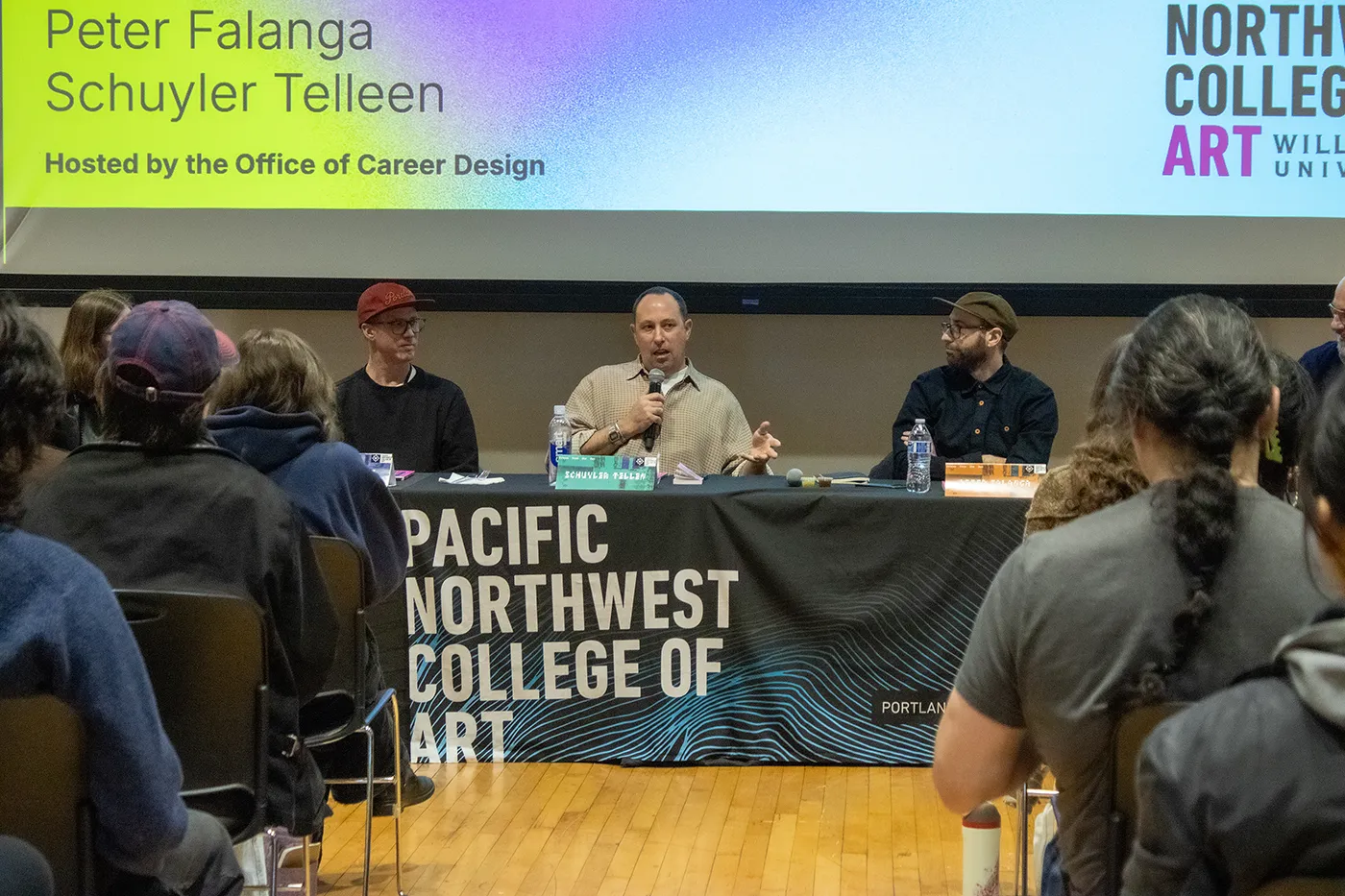
This year, the Office of Career Design hosted a series of Industry Events learning sessions and workshops at PNCA’s campus in the creative heart of Portland. These experiential learning opportunities offer students direct access to acclaimed professionals across multiple disciplines.
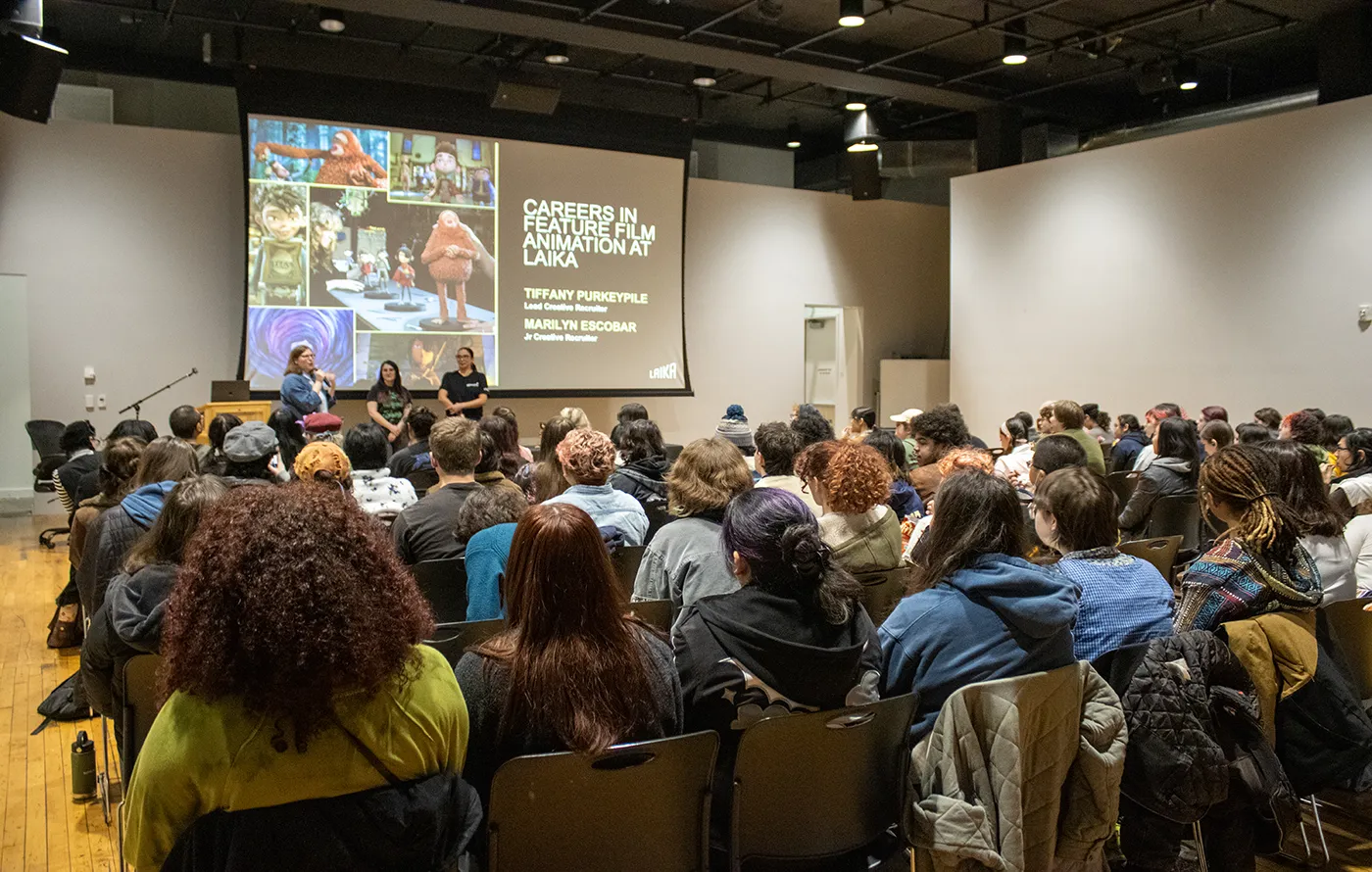
Career design events provide students with invaluable opportunities to engage directly with a diverse array of industry leaders, including recruiters from LAIKA, production designers from major studios like Netflix and Shadow Machine, independent arts publishers, and local gallery directors.
PNCA provides the career preparation students need to thrive
Justine Highsmith is the Director of the Office of Career Design at PNCA. In her role she focuses on helping students access unique learning experiences and making professional connections.
We reached out to Highsmith to learn a little bit more about PNCA’s commitment to preparing students to succeed in their career paths.
Why is it so crucial for emerging creators to interact directly with major industry leaders — like LAIKA recruiters or Netflix production designers — while they are still in school?
Networking opens doors; great opportunities often come from great connections. These events are the starting point for many of our students to hear directly from industry professionals and connect with them, too. Students gain valuable insights by meeting artists and designers who are already doing what they aspire to do, which helps bridge the gap between theory and practice.
There's plenty of data out there that shows when students have access to industry professionals, either through experiential learning opportunities like pitch projects, internships, job shadowing, or informational interviews, they are more likely to accelerate their long term job growth and boost employability.
Looking at the 2026 Career Design lineup — from the “Voices from the Set” panel to “The Business of Showing Art” workshop — how do these specific events translate abstract career goals into actionable steps for students?

Career paths for artists are diverse and nonlinear. While that can feel intimidating at first, it ultimately empowers artists and fosters resilience in an ever-changing workforce. Instead of leaving students wondering “where do I start?”, our events show them what the first steps actually look like, and how to build from there. This spring, we focused on establishing new partnerships in areas of growth within our region, which included film and media.
“Voices from the Set” focused on the role of art departments within film, which includes set design and production. Students often think that going into the film industry means being a director or camera operator. While these jobs exist, there is an entire world of positions open for students whose interests lie in fabrication and studio art skill sets. We homed in on professions that value the interdisciplinary approach our students are known for.
In addition to panel discussions and networking events, we hosted a series of workshops targeting the “creative career toolkit,” which included contracts for freelance work, grants and fellowship applications, and best practices for resume, CV, cover letters, and portfolio development. When students have the materials and knowledge they need to begin networking — both virtually and in person — they arrive at our events with greater confidence and a clearer sense of how to collaborate while advocating for their work. Networking is community-building, and we work to help students get in front of as many professionals as possible while they're a student at PNCA.
How does PNCA actively work to bridge the gap between the classroom and the professional art world to ensure students are career-ready?
The Office of Career Design works with students to help them build out an actionable career path before they graduate. This entails career exploration and internship research, dedicated one-on-one advising, help joining a professional organization, attending workshops, networking events, and pitch projects, connecting with alumni, training for informational interviews and mock interviews, and off-site visits for classrooms or small groups.
All of these opportunities help our students take what they learn in the classroom and practice professional skills in real-world settings, build meaningful industry connections, and graduate with the experience needed to successfully launch their careers.
Following graduation, we continue to support alumni through yearly advising, networking events, and mentorship. An artist's personal and professional development is an ongoing process, and we often have alumni serve on the panels that our current students attend! It’s a powerful full-circle moment that shows just how vital community connection is to thriving in the creative industries.