The California Institute for Biodiversity has awarded Willamette University Biology faculty two grants totaling $80,000 to conduct biodiversity research in the state of California — helping scientists discover and protect species.
The research contributes to larger efforts to understand California’s rich ecosystems. As one of only 36 recognized biodiversity hotspots in the world, California is an important site for understanding the interplay between species.
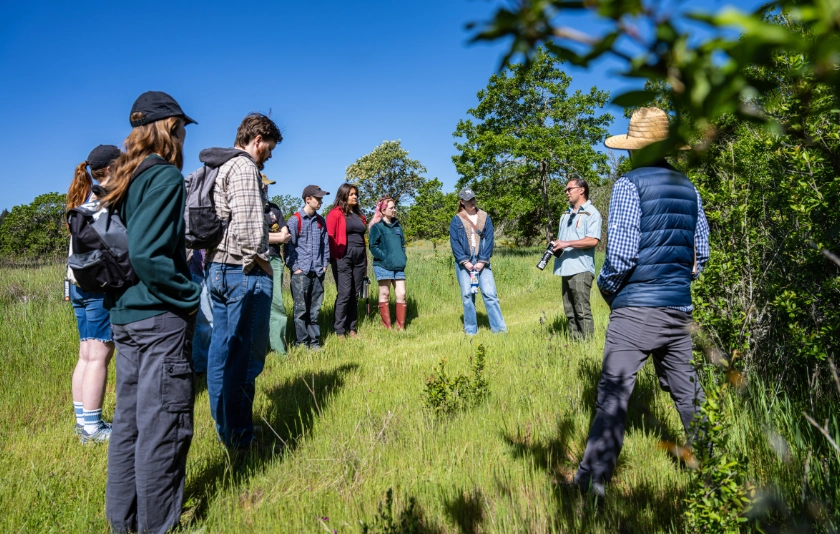
The awards will also provide valuable hands-on research opportunities for Willamette undergraduate students, who will work in collaboration with faculty in the field and in the lab.
Uncovering the impacts of climate change in the Mojave desert
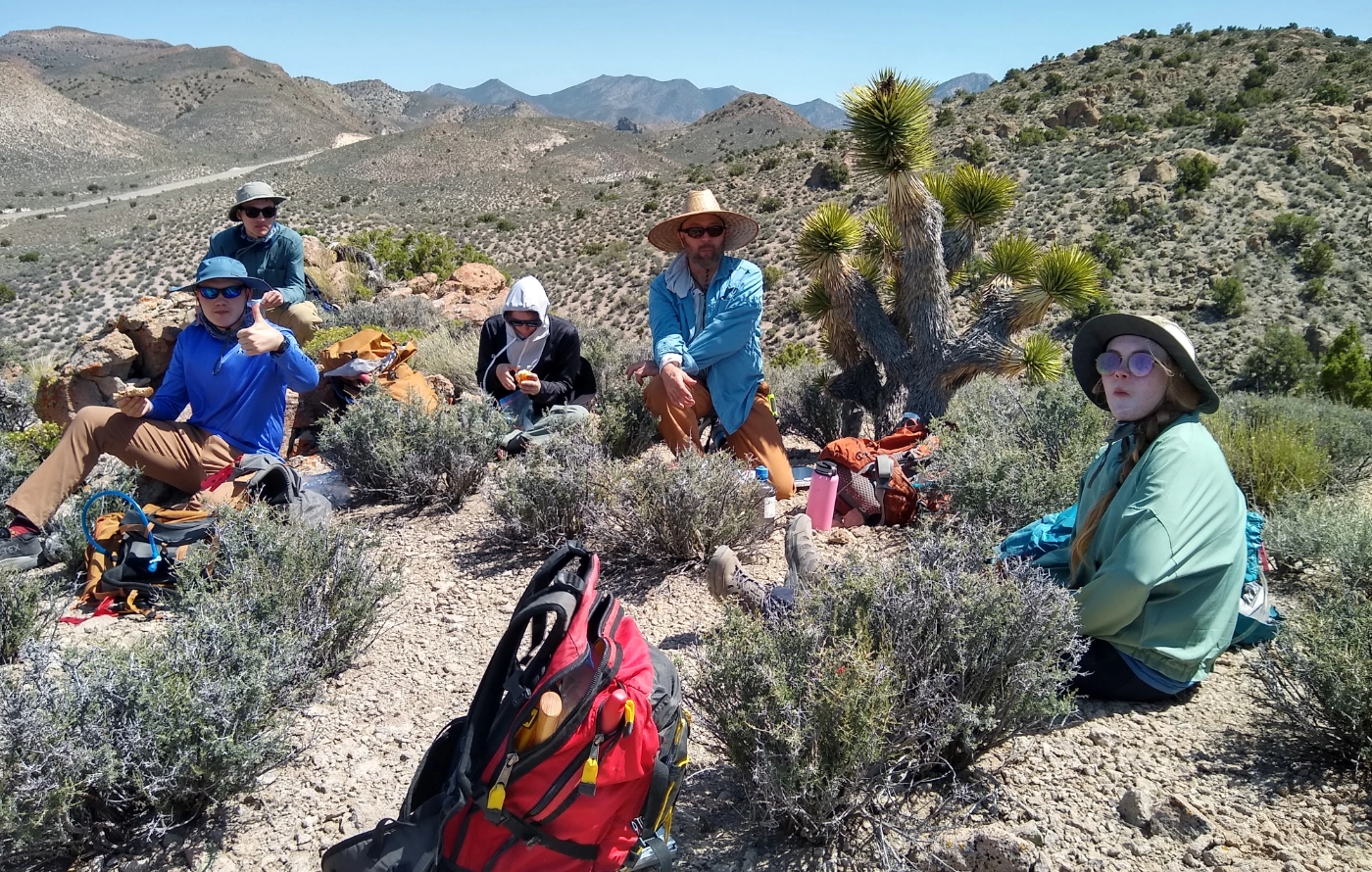
A $50,000 grant will support research by Professor of Biology Christopher Smith and Visiting Assistant Professor of Biology Robert Bills to survey arbuscular mycorrhizal (AM) fungi associated with Joshua trees. This grant funding will allow Smith, Bills, and four undergraduate research interns to study these fungi by visiting 32 sites in California’s Mojave desert.

Arbuscular mycorrhizal fungi help plants respond to drought stress during times where rain is scarce in the Californian desert. The fungi require a plant host for survival and may play an important role in the establishment of Joshua tree seedlings in the dry desert environment. Since Joshua trees live in one of the most extreme environments in North America and these fungi are found underground, more research needs to be done in order to identify which species are present. Such work can help understand the overall health of the Mojave Desert ecosystem.
The research team will sample roots and soil from six different trees at each site as part of a long-term study of the shifting patterns of Joshua tree distribution and survival. By cataloging species of AM fungi, Smith and Bills will be able to determine whether the same fungal species are present throughout the range of Joshua trees and in sites that Joshua trees are likely to migrate to. This is also an opportunity for potentially describing new species of these important fungi.
This new work will build upon previous research conducted in the Smith Lab on how Joshua trees respond to climate change.
“Working in the Smith lab was an amazing experience because I had the opportunity to do both lab and field work, but also because we were helping pave the way for future research in Joshua tree mycorrhizal fungi,” said Ajia Buvit BA’26, one of the students who worked on the previous research in 2024.
The project will not only give more insights into how these fungi operate, but will help to broaden researchers’s understanding of fungal networks, which could be applied to conservation efforts in other ecosystems in the future.
“We are very grateful for the generous support from the California Institute for Biodiversity,” Bills said. “Their funding not only helps us advance our molecular and ecological understanding of Joshua trees and AM fungi across the Mojave Desert, but also helps support summer internships that provide hands-on research opportunities for our undergraduate students.”
Creating a genetic Rosetta Stone for gall wasp species
A second grant of $30,000 was awarded to Smith and Continuing Professor of Biology Briana Lindh to study the species diversity of parasitoid wasps, insects of ecological complexity and, in many cases, species not yet known to science.

Gall wasps are an incredibly diverse group of insects, with one family alone comprising over 1000 different species. The wasps in the Cynipidae family lay their eggs in oak tree tissue and the developing larvae excrete hormones that shape the development of a gall, a home and food source for the baby wasp. Galls can become like nested Russian dolls, with a second species of wasp, a parasitoid, injecting its own egg into the gall. The parasitoid larva then eats the primary larva and benefits from the gall.
This grant will allow Lindh and Smith to collect galls in California and catalogue the primary and parasitoid wasps that emerge from them in the lab. The researchers will then conduct DNA barcoding of the emerged wasps, generating DNA sequences commonly used to identify species — determining how many species are present and identify the specimens if a reference DNA barcode sequence exists.
The project is expected to generate the first barcode sequence for most of these parasitoid wasp species. Pinned wasp specimens will be sent to the California Academy of Sciences insect collection, along with their DNA barcode sequences — serving as a Rosetta Stone which will help researchers match DNA sequences to wasp morphology and species names.
Editor's Note: special thanks to Gwen Snyder BS'28 and Erin Boers.