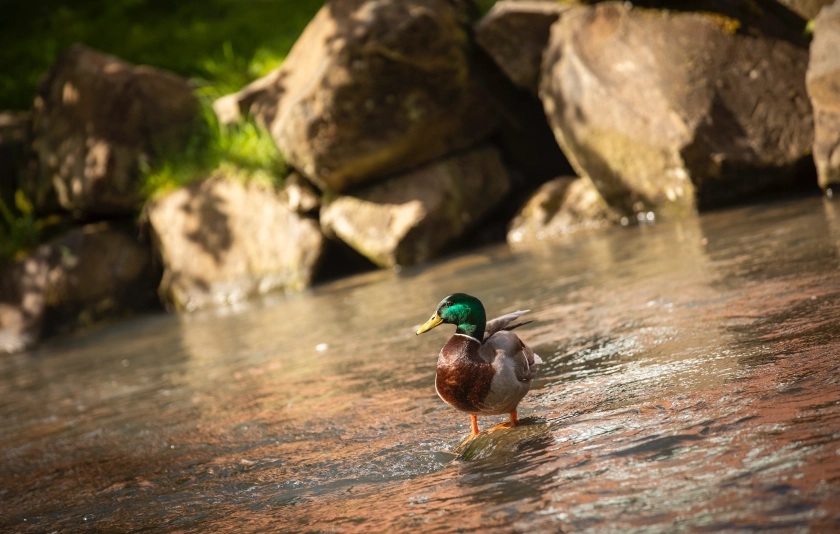
The Mill Stream is a symbol of connection and serenity for the Willamette community. It’s where candles drift during the Matriculation ceremony and where students sink into submerged adirondack chairs on warm afternoons. More than a scenic backdrop, the creek is a defining feature that CastawayWU — one of Willamette’s largest student organizations with over 200 members and volunteers — is working to protect.
In 2025, CastawayWU launched the Mill Creek Research Project (MCRP), focused on baseline water quality monitoring in Salem’s larger Mill Creek and Mill Race watersheds. Their aim is to clean up and protect the environment for years to come.
In collaboration with the City of Salem, real-world research experience empowers students while benefitting salmonid habitat restoration, public health risk reduction, and Indigenous food sovereignty.
“Our project began when Professor of Biology David Craig shared three student thesis projects about water quality in Salem’s watersheds,” shares Eyan Hackney BA’26, one of the founders of CastawayWU. “The previous projects concluded that there was not enough data to make any good inferences or plan restoration projects. So we decided to change that and collect the data ourselves.”
With support from the Community Action Fund for Equity and Sustainability (CAFES), students are utilizing their skills across environmental science, data science, civic engagement, and environmental justice to address gaps in data spanning two decades surrounding indicators of the creek’s health like water temperature, turbidity, dissolved oxygen, and PH levels. Each of these indicators are key factors that point to the health of the creek and its viability as a habitat for wildlife.
Students have been able to integrate existing water quality monitoring data with their own field-based testing. Ultimately, their goal is to provide insight into planning for ecological restoration, public health risk mitigation, and long-term conservation.
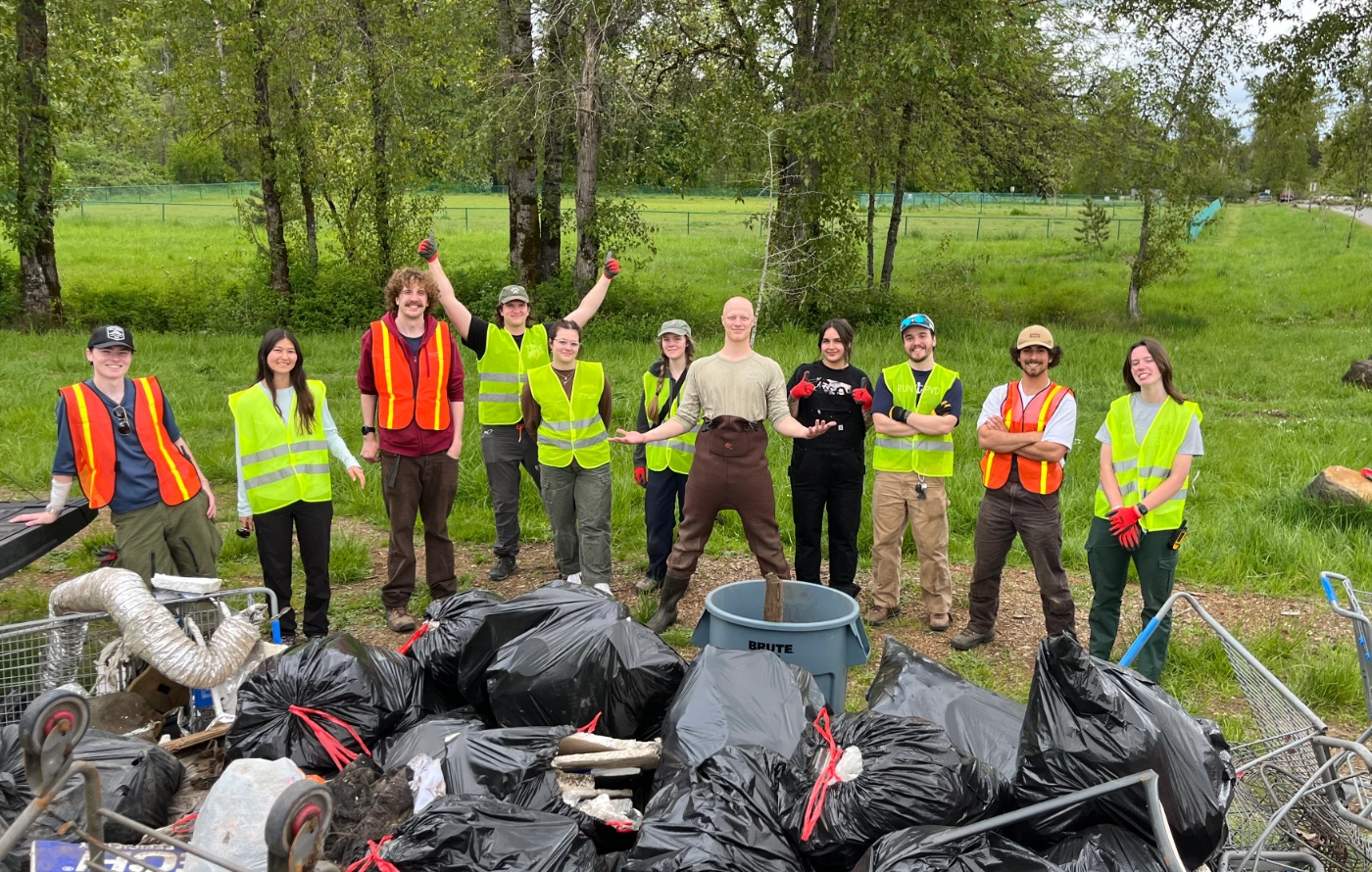
“It’s amazing to see how hardworking these students are. They've cleaned up literally tons of just trash from the banks in addition to valuable environmental testing and data collection,” shares Assistant Professor of Data Science Kristen Gore, who serves as a faculty advisor to the group alongside Professor Craig.
The students were recently asked to send a representative to join the Waller Advisory Committee, a group led by the North Santiam Watershed Council that brings together technical experts, community leaders, and local voices to help guide planning and design for improved fish passage and future restoration at Waller Dam, Mill Creek, and the Mill Race.
“Moving forward, Willamette students will be able to advocate about the future of the Mill Race on campus, and CastawayWU is excited to represent the student body on this matter,” Hackney says.
“Our organization would not have been able to grow as fast as it did without support from various resources at Willamette,” Hackney continues. “Our location right here in the state capital, an ecologically driven municipality, is also vital to our work.”
CastawayWU has many other projects coinciding with MCRP in their commitment to act as environmental stewards. This includes trash cleanups, which have already cleaned over 12,000 pounds of trash; career talk sessions with representatives from the Marion Soil and Water Conservation District; and streamside restoration efforts to help the most impacted areas of Salem’s ecosystem.