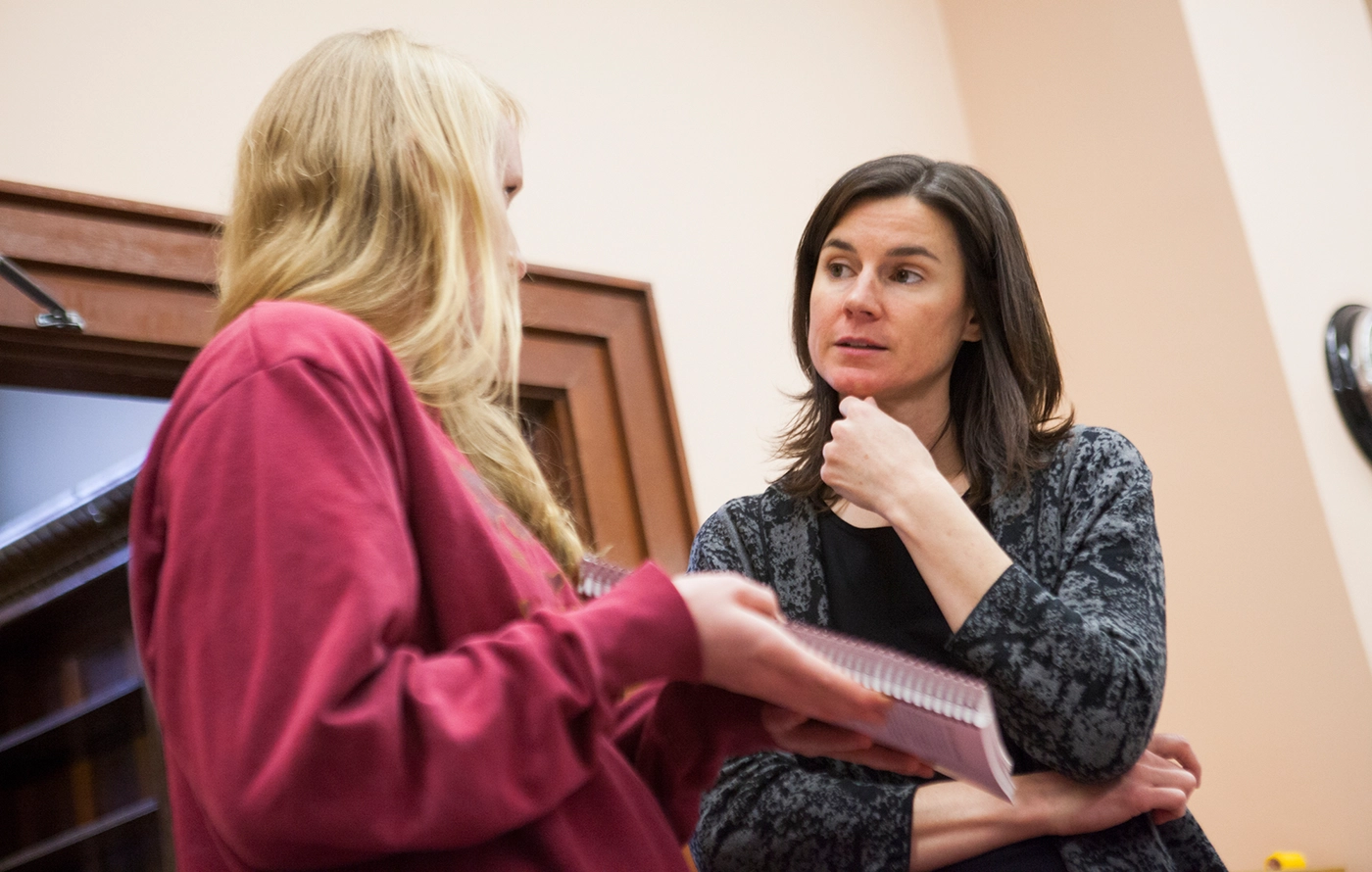
Willamette University Associate Professor of Exercise and Health Science Brandi Row Lazzarini BA’96 approached artificial intelligence first as a learner. Working on a research project in 2023, just as ChatGPT was taking the world by storm, Row Lazzarini used AI to learn how to improve her computer programming skills for analyzing her biomechanics data. The experience piqued her curiosity, and she quickly started to think about how the technology might begin to shape her students’ learning.
“I was observing how AI can help us learn, but also observing how it could interfere with learning,” Row Lazzarini says. “So I really just became interested in listening to all the perspectives I could find on the matter.”
It’s an approach that she takes to helping students incorporate AI tools into their coursework. In her courses, students develop the self-awareness and critical thinking skills they need to use the technology effectively and responsibly. They then turn their insights into high-impact projects on topics that are relevant to them — from future physical therapists using AI to help develop patient education materials to first-year students exploring how AI might transform their own career search.
A methodical approach
Last fall’s first-year colloquium course “Generative AI and the Learning Experience” began with a deep dive into the science of learning to understand how AI may affect the ways in which we learn. Then, students took a methodical approach to putting together an analytical essay about a learning-related concept.

Rather than using AI as a shortcut, Row Lazzarini helped her students carefully and thoughtfully incorporate AI tools into their writing process. For example, students used AI to broadly survey academic research on their topics, allowing them to prioritize which sources to read deeply.
They then moved to a human-centric review, exchanging peer feedback and refining their arguments manually. By the time they finally used AI to review their drafts, Row Lazzarini says her students were surprised to find the bot's feedback was no longer useful. They had already surpassed the AI’s capabilities through their own deep engagement with the material.
Students found the course’s exploration of AI to be meaningful and relevant.
“I don't think it's possible to fully ignore the reality of artificial intelligence's continued development, which is why classes like this AI colloquium are so important to take,” said Sonali DeSilva-Craycroft BA’29, one of Row Lazzarini’s colloquium students.
A laboratory for learning
For Row Lazzarini, Willamette is the perfect laboratory for students to use AI in ways that help rather than hinder their learning. As both a Willamette alum and a professor, Row Lazzarini knows firsthand how Willamette’s small, hands-on classes ensure students get the most out of their education.
“A high-touch environment helps us ensure that it's the human who is gaining the proficiency and not the bot,” Row Lazzarini says.
She points out that students learn better — and are less likely to rely on AI to shortcut their work — when they are given projects that are meaningful for them. In keeping with Willamette’s focus on helping students turn knowledge into action, her students apply their learning and are asked to justify how their projects are well-suited for making an impact.
“In our classes at Willamette, students are provided autonomy and the intellectual opportunity to apply the course skills to a topic and a project that means something to them,” Row Lazzarini says.
Row Lazzarini’s colloquium course ended with a collaborative project exploring the real-world impacts of AI. Students applied AI to topics that interested them. One group examined how commercial artists might be harmed by AI. Another group built a website to help college students understand the potential dangers of AI therapy tools. Others explored how AI will impact their career search or the ways that businesses operate.
"The group project was the highlight of the class to me," said Major LeProwse BA’29. “Our topic focused on how artificial intelligence is actively changing the way businesses operate. We wrote a proposal and then created a website to present our research.”
The group’s website offered a comprehensive look at how AI impacts business operations and included a career table analyzing the likelihood of different jobs being automated — a perfect example of students using AI tools to thoughtfully explore the impact that those tools will have on their futures.